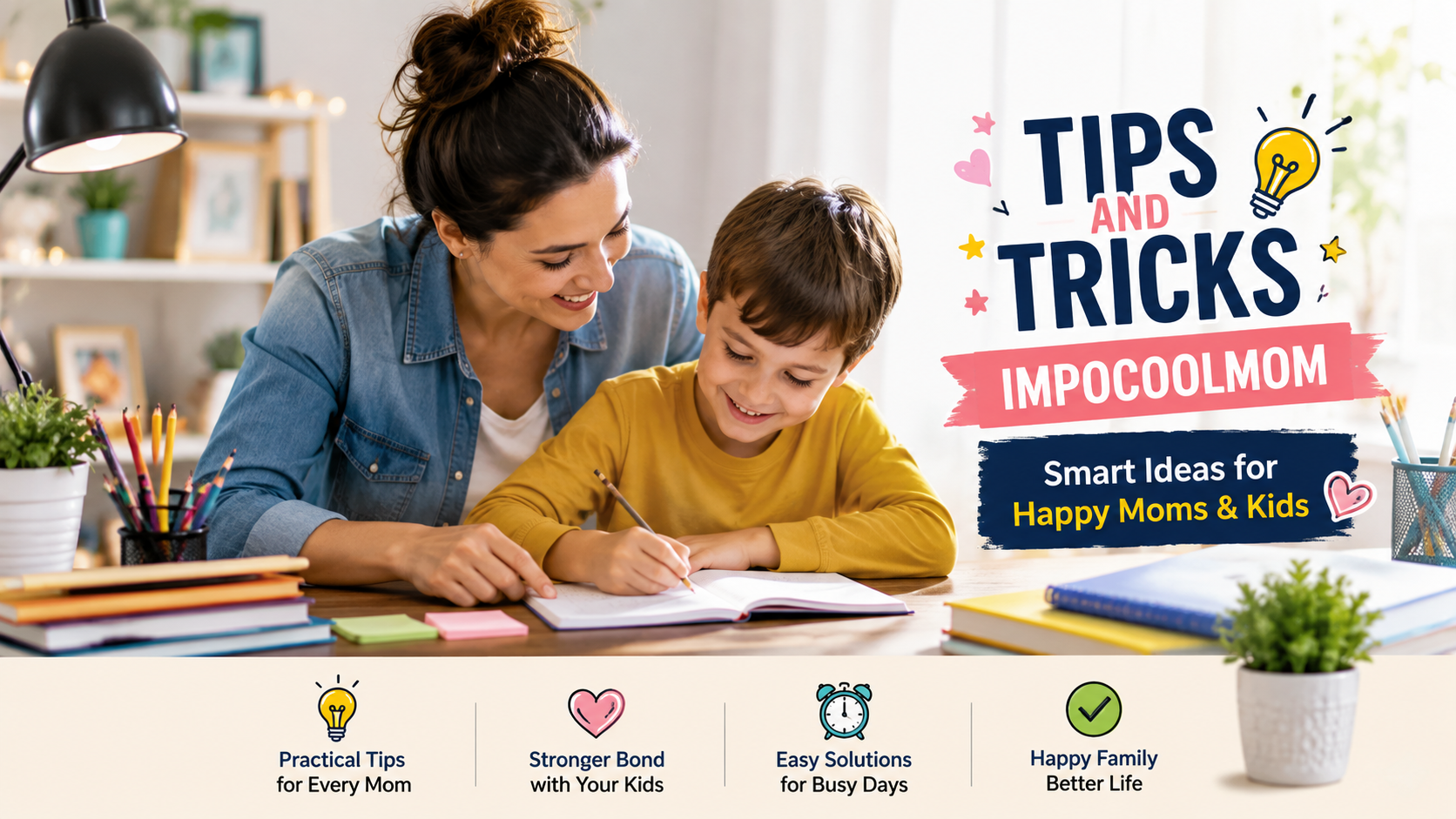
Tips and Tricks Impocoolmom are simple systems for calmer mornings, easier meals, organized homes, and more confident family routines. The best approach is to choose one practical hack, test it for a week, and adapt it to your household.
The Impocoolmom concept focuses on practical advice for parenting, family life, home management, wellness, productivity, and everyday challenges. Its broader content positioning emphasizes useful information that readers can apply in real life.
These ideas are not about becoming a perfect parent.
They are about reducing daily friction.
A visual checklist can replace repeated reminders. A meal rotation can remove dinner decisions. An organized drop-off basket near the entrance reduces the likelihood of forgotten school items.
Small systems create noticeable relief.
Quick Summary of Impocoolmom Tips and Tricks
|
Area |
Practical tip |
Main benefit |
|
Morning routine |
Prepare clothes, lunches, and bags at night |
Fewer rushed decisions |
|
Parenting |
Use visual checklists and clear “when/then” rules |
More child independence |
|
Home organization |
Create fixed storage zones |
Less clutter and searching |
|
Meals |
Rotate family-approved dinners |
Easier weekly planning |
|
Family life |
Use one shared calendar |
Better communication |
|
Cleaning |
Complete a 10-minute evening reset |
A calmer start tomorrow |
|
Self-care |
Take small recovery breaks |
More sustainable energy |
The most effective Impocoolmom family tips have one feature in common.
They make the preferred behavior easier.
Children see where their bags belong. Parents see the weekly schedule. Everyone knows what happens next.
That clarity matters more than complicated systems.
Impocoolmom Parenting Tips for Calmer Family Routines
Create a visual morning checklist
Children often struggle with verbal instructions delivered too quickly.
A visual checklist makes the sequence visible.
Use simple steps such as:
- Get dressed.
- Eat breakfast.
- Brush teeth.
- Pack the backpack.
- Put on shoes.
- Check the front-door basket.
Use pictures for younger children and words for older children.
Place the checklist at eye level. A laminated page or whiteboard works well.
The goal is not perfect compliance. The goal is fewer repeated instructions.
Use clear “when/then” language
Long explanations can create more resistance.
Try a short sequence instead:
- When homework is finished, then screen time begins.
- When toys are in the bin, then choose a bedtime book.
- When shoes are on, then we leave.
This structure keeps the expectation clear.
It also avoids turning every request into a debate.
Keep the rule consistent. Change the reward when needed.
Give children age-appropriate responsibilities
Children gain confidence when they contribute meaningfully.
Start with manageable tasks:
- Put laundry in the hamper.
- Feed a pet with supervision.
- Clear a plate.
- Sort clean socks.
- Place toys in labeled bins.
- Pack part of a school bag.
A chore chart can help younger children.
Older children may prefer a weekly responsibility list.
Focus on consistency rather than perfection. A slightly messy completed task teaches more than a task always completed by an adult.
Protect daily connection time
Family routines should not focus only on efficiency.
Set aside a short period for connection.
This might include:
- Ten minutes of one-on-one conversation.
- Reading together.
- A walk after dinner.
- A shared snack without phones.
- Asking about one good moment and one difficult moment.
Short, predictable connection often fits better than rare, elaborate activities.
The point is attention, not entertainment.
Impocoolmom Life Hacks for Busy Mornings
Mornings become easier when fewer decisions happen before breakfast.
Prepare the night before
Spend ten minutes preparing the next day.
Check:
- Clothes
- Lunches
- School forms
- Sports equipment
- Medication reminders
- Backpacks
- Weather-sensitive items
Keep completed items near the exit.
This turns morning preparation into a quick check instead of a scavenger hunt.
Create a front-door launch zone
Give everyday items a permanent landing place.
Use:
- Hooks for backpacks.
- A basket for papers.
- A tray for keys.
- A shoe rack.
- A bin for sports gear.
- A small container for items leaving the house.
Label the zones when children are young.
The system works only when returning items is easier than leaving them elsewhere.
Add a realistic time buffer
Many families plan the exact time needed.
That leaves no space for spilled milk, missing shoes, or slow transitions.
Add a small buffer before departure.
Use it for:
- Last-minute bathroom trips.
- Rechecking the launch zone.
- Fixing a forgotten item.
- Helping a child regulate emotions.
A buffer is not wasted time.
It is protection against predictable delays.
Impocoolmom Household Tips for Less Clutter
A tidy home does not require constant deep cleaning.
It needs repeatable storage and reset habits.
Set up a family command center
Choose one visible location.
Include:
- A family calendar.
- Key hooks.
- A mail tray.
- A whiteboard.
- School notices.
- A grocery list.
- Weekly reminders.
The command center should answer common questions.
- What does today have in store?
- Which items need to leave the house?
- Which messages or tasks need a response?
A central location reduces scattered information.
Use labeled storage
Labels make organizing easier for everyone.
Use clear categories such as:
- Building toys
- Art supplies
- School items
- Winter accessories
- Cleaning products
- Extra toiletries
- Sports equipment
Transparent bins help children identify contents quickly.
Labels also make cleanup less demanding.
Avoid creating too many categories. A system with five broad bins may work better than one with twenty tiny sections.
Try a 10-minute evening reset
Set a timer for ten minutes.
Each person handles one small area.
Possible zones include:
- Kitchen counters.
- Living-room floor.
- Entryway.
- Dining table.
- School-bag area.
- Laundry sorting.
Stop when the timer ends.
This keeps cleaning from becoming an exhausting project. The ImpoCoolMom approach similarly emphasizes short resets, accessible supplies, and practical organization systems for busy households.
Apply the one-in, one-out rule
When a new item enters, one similar item leaves.
Use this for:
- Toys
- Clothes
- Shoes
- Water bottles
- Kitchen gadgets
- Craft supplies
The rule does not need to be rigid.
Use it as a household guideline.
This helps control clutter gradually without needing an entire weekend for decluttering.
Impocoolmom Family Tips for Easier Meals
Meal planning should reduce decisions.
It should not create another demanding project.
Build a rotating meal plan
Select ten to twelve dishes that your family already enjoys.
Create a flexible rotation.
For example:
- Monday: Pasta
- Tuesday: Tacos
- Wednesday: Rice bowls
- Thursday: Soup or sandwiches
- Friday: Homemade pizza
- Saturday: Leftovers
- Sunday: Batch-cooked meal
A rotation saves planning time.
It also creates predictable grocery needs.
Leave space for changes. A plan should support your family, not control it.
Batch-prep flexible ingredients
Prepare ingredients that can appear in several meals.
Examples include:
- Cooked rice.
- Roasted vegetables.
- Hard-boiled eggs.
- Washed fruit.
- Cooked chicken.
- Beans.
- Chopped salad vegetables.
This is more flexible than preparing seven complete meals.
One ingredient can become lunch, dinner, or a quick snack.
Create a child-friendly snack station
Place approved snacks where children can reach them safely.
Use small portions of options such as:
- Fruit.
- Yogurt.
- Crackers.
- Cheese.
- Nuts, when age-appropriate and safe.
- Cut vegetables.
- Water bottles.
This gives children controlled independence.
It also reduces interruptions during busy parts of the day.
Review food safety and allergy needs for your household. Younger children may need direct supervision.
Use theme nights
Theme nights simplify choices.
Try:
- Taco Tuesday.
- Pasta night.
- Breakfast for dinner.
- Soup night.
- Leftover night.
- Build-your-own bowl night.
Children often enjoy the predictability.
Parents benefit from simpler shopping.
Themes can change whenever the family becomes bored.
Impocoolmom Organization Tips for Managing Family Time
Use one shared family calendar
Choose one calendar everyone can access.
Include:
- School events.
- Appointments.
- Work commitments.
- Activities.
- Birthdays.
- Travel.
- Household deadlines.
Color-code each person.
Add reminders before important events.
A calendar is most useful when it reflects the entire family’s schedule.
Batch similar tasks
Group similar tasks together.
Examples:
- Complete errands in one trip.
- Answer messages during one time block.
- Prepare several lunches together.
- Sort laundry by category.
- Schedule appointments during one planning session.
Batching reduces repeated setup time.
It also limits constant task switching.
Hold a weekly family planning meeting
Choose a consistent time.
Keep the meeting short.
Review:
- The week’s schedule.
- Transportation needs.
- Meals.
- School requirements.
- Household responsibilities.
- One possible problem.
Invite children to participate.
They may notice conflicts adults miss.
Reduce unnecessary commitments
A full calendar creates hidden household work.
Before accepting an activity, consider:
- Does it support our priorities?
- Who will handle transportation?
- Does it affect sleep?
- Is the commitment temporary?
- What will we stop doing?
Saying no can protect family time.
It can also reduce rushed transitions.
Impocoolmom Home Hacks and Smart Automation
Technology can help when it removes repetitive decisions.
It should not create more alerts and maintenance.
Schedule repetitive tasks
Consider automation for:
- Lights.
- Reminders.
- Grocery lists.
- Timers.
- Heating or cooling schedules.
- Shared calendar notifications.
Start with one task you repeat often.
The ImpoCoolMom guidance on smart-home routines highlights scheduled lighting, voice reminders, smart plugs, and household lists as examples of useful automation.
Use voice reminders
Voice assistants can support busy routines.
Use them to:
- Add items to a grocery list.
- Set a timer.
- Announce calendar events.
- Remind children about transitions.
- Create a bedtime routine.
Keep reminders specific.
“Start getting ready” is vague.
“Put on pajamas now” is clearer.
Automate only high-friction tasks
Do not automate everything.
Choose tasks that are:
- Repetitive.
- Easy to forget.
- Time-sensitive.
- Shared by multiple family members.
A simple reminder may solve the problem.
You may not need another device.
Impocoolmom Kids Tips for Confidence and Cooperation
Praise effort and progress
Specific feedback teaches children what helped.
Try:
- “You kept trying after the first attempt.”
- “You remembered your backpack without a reminder.”
- “You solved that problem calmly.”
- “You cleaned up one area completely.”
Avoid making every compliment about winning.
Effort-based feedback supports persistence.
Give children meaningful choices
Limited choices can reduce conflict.
Offer two acceptable options:
- Blue shirt or green shirt?
- Homework before snack or after snack?
- Bath before reading or after reading?
- Pack the lunchbox or fill the water bottle?
The adult keeps the boundary.
The child receives some control.
Build routines around transitions
Transitions often create resistance.
Give advance notice:
- “Five minutes until cleanup.”
- “Two more minutes, then shoes.”
- “After this page, lights out.”
Use the same sequence whenever possible.
Predictability helps children shift activities.
Teach problem-solving skills
When a child faces a small problem, resist solving it immediately.
Ask:
- What happened?
- What have you tried?
- What could you try next?
- Which option seems safest?
- How can we repair the problem?
Offer help when necessary.
Independence grows through supported practice.
Impocoolmom Lifestyle Tips for Sustainable Self-Care
Self-care does not need to be expensive or elaborate.
It needs to be realistic.
Use small recovery moments
Try brief activities such as:
- Drinking water before another task.
- Taking a short walk.
- Stretching for five minutes.
- Listening to music.
- Reading a few pages.
- Sitting outside.
- Calling someone supportive.
Small breaks are easier to repeat.
They also fit unpredictable parenting days.
Create a simple evening wind-down
Use three repeatable steps:
- Reset one visible area.
- Prepare one item for tomorrow.
- Do one calming activity.
Avoid building a long routine you cannot maintain.
Consistency matters more than complexity.
Ask for practical help
Be specific when asking for support.
Instead of saying, “I need help,” try:
- “Can you handle pickup on Thursday?”
- “Can you prepare dinner tonight?”
- “Can you watch the children for one hour?”
- “Can you fold this laundry while I finish bedtime?”
Clear requests are easier to answer.
You do not need to manage every responsibility alone.
How to Start Using These Mom Tips and Tricks
Do not change the entire household at once.
Start with one recurring problem.
Step 1: Identify the biggest friction point
Choose one:
- Rushed mornings.
- Lost belongings.
- Dinner decisions.
- Toy clutter.
- Homework conflict.
- Overscheduled afternoons.
Step 2: Choose one simple system
Match the problem to a practical solution.
- Lost items: front-door launch zone.
- Morning stress: visual checklist.
- Dinner stress: rotating meal plan.
- Clutter: labeled bins.
- Calendar confusion: shared family calendar.
Step 3: Test it for seven days
Do not judge the system after one difficult day.
Watch for:
- What works.
- What gets ignored.
- Where the system breaks.
- Which family member needs support.
- What can be simplified.
Step 4: Adjust the system
A useful routine should fit your family.
Move the basket.
Change the labels.
Shorten the checklist.
Replace meals no one eats.
Remove unnecessary steps.
The best Impocoolmom practical advice is adaptable. The goal is not to copy another family’s routine perfectly. The goal is to build a household system that works in your home.
Frequently Asked Questions
What are the best Tips and Tricks Impocoolmom for busy moms?
Start with a visual morning checklist, a front-door launch zone, a rotating meal plan, and a ten-minute evening reset. These systems address common problems without requiring expensive products.
How can I use Impocoolmom parenting tips with young children?
Use pictures, short instructions, limited choices, and predictable transitions. Keep expectations age-appropriate, and help children practice the routine until it becomes familiar.
Which Impocoolmom household tips work in small homes?
Use vertical hooks, labeled bins, one landing zone, and the one-in, one-out rule. Small homes benefit from clear storage boundaries because every item has a stronger effect on available space.
How can I reduce morning stress without waking up much earlier?
Prepare clothes, bags, lunches, and paperwork the night before. Then place all departure items near the door. This reduces morning decisions without requiring a major schedule change.
Are Impocoolmom life hacks expensive?
Many practical hacks cost little or nothing. Checklists, shared calendars, meal rotations, baskets, and ten-minute resets can use items you already own.
How do I get children to follow new routines?
Introduce one routine at a time. Explain the reason, show the steps, and provide consistent reminders. Let children help choose labels, colors, or checklist images.
What are the best Impocoolmom mom hacks for household cleaning?
Use a small cleaning caddy, clean by zones, and complete short daily resets. The aim is steady maintenance, not an exhausting cleaning marathon.
How can I balance parenting routines with self-care?
Attach a small self-care habit to an existing routine. For example, drink water after school drop-off or read during a regular evening transition. Keep the habit short enough to repeat.
Final Takeaway
The best Impocoolmom tips and tricks are practical, flexible, and easy to repeat.
- Families can reduce unnecessary decisions more easily.
- Clear spaces keep important items organized and easy to find.
- Meal planning becomes simpler and less stressful.
- Children also get more opportunities to participate in daily activities.
Most importantly, they leave more room for connection.
Choose one system today. Test it for a week. Keep what works, change what does not, and build from there.
Click here for more details.