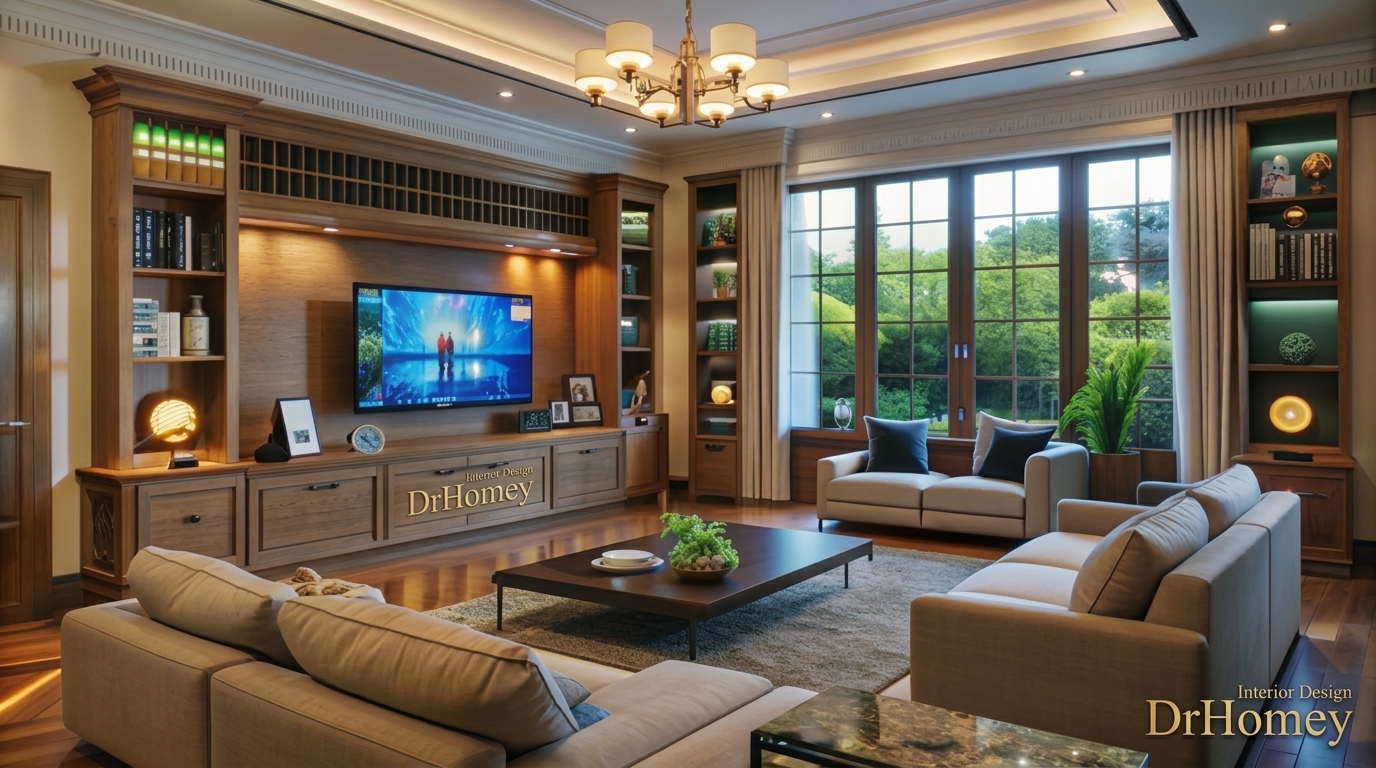
Interior Design DrHomey is a function-first home styling approach that uses simple proportion rules, layered lighting, and budget-aware upgrades to make any room look stylish without professional design fees. This guide explains the method and shows exactly how to apply it room by room.
The DrHomey Method at a Glance
| Element | What It Means | Benefit | Best For |
| 60-30-10 rule | 60% dominant color, 30% secondary, 10% accent | A balanced palette without guesswork | Any repaint, refresh, or new room |
| 3-5-7 rule | Decor grouped in odd numbers (3, 5, or 7 items) | Natural, uncluttered surfaces | Shelves, mantels, coffee tables |
| Layered lighting | Ambient + task + accent light sources | Depth, warmth, and flexibility | Every room, especially dark ones |
| Function-first layout | Plan how the room is used before how it looks | Spaces that work every day | Small homes and busy households |
| Trend filter | Adopt, adapt, or skip each new trend | A timeless base with current accents | Budget-conscious decorators |
What Is Interior Design DrHomey?
Interior design DrHomey is a home styling philosophy built around one idea: your house is a place to live, not a showroom to photograph. Instead of chasing picture-perfect looks, the method starts with how you actually use each room, then layers in color, light, and decor that make daily life easier and more pleasant.
The name DrHomey refers to a home content brand that publishes practical guidance on interior design, home improvement, and everyday living. It is a method and a resource, not a design firm or a single fixed style — which is exactly why it works for modern farmhouse living rooms, minimalist bedrooms, and everything in between.
Three principles hold the whole approach together. First, function comes before decoration. Second, simple repeatable rules beat expensive instinct — you do not need a design degree to balance a color palette or light a room correctly. Third, small budget-aware upgrades often transform a space more than one big expensive purchase.
The Core Rules Behind the Method
The 60-30-10 Color Rule Explained
The 60-30-10 rule divides a room’s color into three roles: 60% dominant, 30% secondary, and 10% accent. The dominant share usually covers walls, large rugs, and big furniture. The secondary tone appears in curtains, throw pillows, accent chairs, or an area rug. The final 10% is the punch — a vase, art, or cushions in a bolder color.
Here is a worked example for a neutral living room: warm off-white walls and a beige sofa take the 60%, a sage green rug and curtains take the 30%, and burnt-orange pillows and a ceramic vase carry the 10%. The room instantly reads as designed rather than assembled.
You can bend the rule once you understand it. A 70-20-10 split suits very calm, minimalist interiors, while a monochromatic scheme can run 80-15-5. What you should not do is give the accent color more than roughly 10% of the visual space — that is the moment a room starts to feel chaotic.
The 3-5-7 Rule for Decor Groupings
Odd-numbered groupings look natural because the eye keeps moving; even numbers feel formal and static. The 3-5-7 rule gives every surface a target: three items on a small side table, five on a mantel or open shelf, seven on a long console or large bookcase.
Vary three things within each grouping: height, texture, and shape. A tall candlestick, a stack of two books, and a small trailing plant make a classic trio. Leave negative space between objects — a grouping that fills every inch looks cluttered, not styled.
Three-Layer Lighting: Ambient, Task, and Accent
Every well-lit room uses three layers. Ambient light is the overall glow — an overhead fixture or recessed lights. Task light serves a specific job: a reading lamp, a desk lamp, under-cabinet strips in the kitchen. Accent light adds drama: picture lights, LED strips behind a TV, candles, or a small uplight on a plant.
A room lit only from the ceiling looks flat and slightly institutional, especially at night. Aim for at least three separate light sources in living spaces and bedrooms, placed at different heights. Swap every harsh cool-white bulb for warm white (around 2700K) — it is the single cheapest upgrade in this entire method.
Room-by-Room Application Guide
The rules stay the same in every room, but the priorities change. Use this table as your starting point for each space:
| Room | First Priority | Second Priority | Best Colors to Start With | Common Trap to Avoid |
| Living room | Seating layout around conversation | Layered lighting (3+ sources) | Warm neutral base + one earthy accent | Pushing all furniture against the walls |
| Bedroom | Blackout-friendly layered lighting | Calm 2-color palette | Soft blues, greens, warm neutrals | Overhead-only lighting and busy patterns |
| Kitchen | Task lighting and clear counters | Repeatable decor trio on the island | Whites, woods, one metal finish | Mixing more than two metal tones |
| Bathroom | Bright ambient + mirror task light | Textiles for warmth (runner, towels) | Crisp whites + natural texture | Over-decorating a small wet zone |
| Home office | Task light and ergonomic placement | One accent wall or large art | Greens and neutrals for focus | Working under a single ceiling bulb |
| Entryway | A 3-item console grouping | A mirror to bounce light | Mirror your living room palette | Leaving it as a dark, empty corridor |
Living Room Interior Design DrHomey Style
Start with the conversation zone. If the space permits, position the sofa slightly away from the walls. Leave about 14–18 inches of space between the sofa and coffee table, and define the seating area with a rug large enough to cover at least the front legs of each furniture piece. Choosing a rug that is too small is one of the most common living room mistakes because it can make the entire space appear smaller.
Then apply the color and lighting rules. Build the palette with 60-30-10, and place your three light sources at three heights: a floor lamp behind the sofa, a table lamp on a side table, and a candle or accent light on the mantel. Finish with one 3-5-7 grouping on the coffee table and one larger grouping on the main shelf.
Bedroom Interior Design: DrHomey Style
Bedrooms reward restraint. Keep the palette to two main colors plus soft neutrals, because visual noise is the enemy of rest. Invest first in layered lighting — bedside task lamps on each side, a dimmable ambient source, and optionally a small accent light — then in textiles: layered bedding in two textures beats a dozen decorative pillows.
Style the nightstands as simple trios: a lamp, a small book or two, and one personal object. If the room is small, a mirror opposite or adjacent to the window will double the natural light during the day.
Small-Space and Rental-Friendly Adaptations
Small spaces follow the same rules with tighter margins. Choose furniture with visible legs so light travels underneath, use one large mirror rather than several small ones, and keep the color palette continuous from room to room so the eye reads the home as one larger space. Vertical shelving and over-door storage add function without stealing floor area.
Renters can apply nearly the whole method without drilling or painting. Removable peel-and-stick wallpaper, tension rods, plug-in sconces, large leaned mirrors, layered rugs over boring carpet, and textile swaps deliver most of the visual transformation. Lighting is fully renter-safe: table lamps, floor lamps, and plug-in picture lights require no wiring at all.
Interior Design: DrHomey Meets 2026 Trends
This year’s strongest directions actually suit a function-first home. Organic and sculptural shapes soften boxy rooms and pair well with natural materials. Dark wood is returning in furniture and trim, bringing warmth that pairs beautifully with the method’s warm-neutral bases. And the “lived-in look” — rooms that show real use and comfort — is essentially this philosophy wearing a trend label.
Run every trend through a three-way filter before buying anything:
- Adopt trends that add function or warmth: sculptural lighting, dark wood accents, natural textures like boucle and rattan.
- Adapt trends that only partly fit: color of the year works best as your 10% accent, not a whole wall; curvy furniture works as one statement chair, not a room of them.
- Skip trends that fight the method: anything that adds maintenance you will not do, or pieces you already know you will dislike in a year.
The pattern behind every enduring home is the same: a calm, timeless base updated with small current accents. Chasing trends on the base layer is how homes end up needing full redecoration every few seasons.
Common Decorating Mistakes This Method Prevents
Most homes do not look wrong because of taste — they look wrong because of five fixable errors:
| Mistake | How It Shows Up | Why It Happens | The DrHomey Fix |
| Overhead-only lighting | Flat, dim, hotel-lobby feel at night | Builders install one ceiling fixture and stop | Add task and accent sources at three heights |
| Too-small rug | Furniture looks scattered, room feels smaller | Small rugs are cheaper and easier to buy | Size up so front legs of all seating sit on it |
| Even-numbered clutter | Shelves and tables feel stiff or chaotic | Buying decor in matching pairs feels “safe” | Regroup in odd numbers with varied heights |
| Accent color overload | Busy, restless, tiring room | Falling in love with one bold color | Cap accents at 10% of the visual space |
| Furniture against walls | Awkward dead zone in the middle | Trying to make a small room “feel bigger” | Float seating into a defined conversation zone |
One honest limitation: no rule fixes a room whose layout fights its function. If the living room’s only practical TV wall is also its only window, no amount of styling solves that trade-off — you make a deliberate choice, mitigate with layered lighting and window film, and move on. Design rules guide decisions; they do not erase constraints.
How to Apply the Method: A 5-Step Weekend Plan
- Declutter first (2–3 hours). Remove everything from surfaces you plan to style. You cannot apply the 3-5-7 rule to a shelf that already holds fifteen objects.
- Map the function (30 minutes). Write down how the room is actually used and by whom. List what currently frustrates you — no reading light, nowhere to set a cup, toys with no home.
- Fix the layout (1–2 hours). Rearrange around the primary function using the spacing rules above. Move furniture before buying anything.
- Set the palette (1 hour). Assign your 60-30-10 colors using what you already own. Most homes already contain a workable palette hiding under clutter — you are organizing color, not buying it.
- Layer light and style surfaces (2–3 hours). Add your three light sources, warm the bulbs, then style one surface at a time in 3-5-7 groupings. Stop while each surface still has breathing room.
Budget tiers, if you are buying anything at all:
| Tier | Typical Budget for One Room | What You Buy | Expected Impact |
| Zero-spend refresh | $0 | Rearrange furniture, regroup decor, swap items between rooms | Noticeable — layout and grouping do most of the work |
| Smart refresh | $100–$300 | Warm bulbs, 2 lamps, throw pillows, one textile set | Significant — lighting transforms evening mood |
| Full styling pass | $300–$800 | Above plus a properly sized rug, mirror, and one statement accent | Room reads as professionally styled |
| Base upgrade | $800–$2,000+ | Paint, larger furniture piece, window treatments | Long-term transformation with a timeless base |
Frequently Asked Questions
What is the interior design DrHomey approach in simple terms?
It is a function-first styling method that uses three simple rules — the 60-30-10 color split, odd-numbered 3-5-7 decor groupings, and three-layer lighting — to make rooms look considered and welcoming. You plan how a room is used first, then style it with proportion and light rather than expensive purchases.
Is the DrHomey method suitable for renters?
Yes, almost entirely. Layout planning, color grouping, odd-number styling, and lamp-based layered lighting require no permanent changes. For the visual extras, renters can use peel-and-stick wallpaper, leaned mirrors, removable hooks, tension rods, and layered rugs — all fully reversible.
How many light sources should a living room have?
Aim for at least three at different heights: an ambient source such as a floor lamp or ceiling light, a task source such as a table lamp near seating, and an accent source such as candles or a picture light. Use warm white bulbs around 2700K throughout for a consistent, cozy evening feel.
What is the difference between minimalist and contemporary interiors?
Minimalist interiors strip a room down to essentials — few objects, neutral palettes, and hidden storage — and prioritize absence. Contemporary interiors reflect current design, layering textures, mixed materials, and more decorative elements. The DrHomey method works in both: minimalism is simply the 3-5-7 rule applied with fewer, larger objects.
How do I make a small living room look bigger?
Float the seating into a defined zone instead of lining the walls, use one large rug rather than a small one, keep the color palette light and continuous, and hang one large mirror near the window. Choose furniture with visible legs so light flows underneath, and resist filling every surface — negative space is what makes small rooms breathe.
How do I choose a color scheme if I have no design experience?
Start with a large fixed element you cannot change — the sofa, the flooring, or the cabinets — and make it your 60% dominant tone. Pick a secondary color you love from a rug, art, or textiles for the 30%, then add one bold accent for the final 10%. Nature combinations like sage and cream or clay and off-white are safe starting points.
Which 2026 interior design trends are worth investing in?
Sculptural lighting, dark wood furniture, and natural textures are the safest bets because they add lasting warmth and function. Treat bold trend colors as accents rather than wall paint, and skip anything that adds maintenance you will not actually do. A timeless base with small current accents never needs a full redo.
Final Thoughts
If you apply only one part of this method, make it the lighting: three warm light sources at different heights will change how your home feels faster than any furniture purchase. From there, the 60-30-10 palette and 3-5-7 groupings will carry the style, and the trend filter will protect your budget. Start with one room this weekend — the results will decide the rest of the house for you.
Visit for more details.