Nobody thinks about their water heater until the morning when the shower suddenly turns cold halfway through shampooing. At that moment, it becomes the most important appliance in the house.
Water heaters are easy to overlook. However, they wear out on a fairly predictable schedule, usually show warning signs before failing, and the replacement you choose affects your energy consumption and hot water supply for the next decade or longer.
How a Tank Heater Ages
A traditional tank water heater stores a fixed quantity of water, often around 150 to 230 litres in a family home, and keeps it heated throughout the day and night. Inside the tank, there is an anode rod, a metal component designed to corrode instead of the steel tank. Once the rod wears away, the tank itself begins to rust from the inside.
Sediment is another problem that develops gradually. Minerals present in the water settle at the bottom of the tank, and this layer accumulates more quickly when the water is harder. It creates insulation between the water and the burner or heating element, forcing the heater to run longer to complete the same task. This sediment also commonly causes the popping and rumbling noises produced by older units.
Most tank water heaters have a lifespan of approximately 8 to 12 years. Some stop working sooner, while others continue operating well beyond that period. You can usually find the manufacturing date on the rating label, although it may sometimes be concealed within the serial number. If you are unsure how old your heater is, take some time this weekend to check.
The Warning Signs
Some warning signs are easy to miss, while others are more noticeable.
Rusty or discoloured hot water.
If brownish water comes from the hot tap only, the tank lining may be corroding.
Rumbling or popping noises.
These sounds usually indicate sediment buildup. Flushing can help a younger tank, although doing so on an older unit may disturb enough debris to block the drain valve.
Hot water runs out faster than before.
Sediment may be taking up storage space, or an element or dip tube may have stopped working.
A rotten egg smell coming from the hot water only.
This often results from a reaction between the anode rod and bacteria in the water. Although unpleasant, the problem can be fixed and occurs more frequently than many people realise.
Water around the base.
This problem requires a closer inspection.
A leak from a fitting or the relief valve pipe may only need a simple repair. However, water leaking through the tank body cannot be fixed that way. Once the tank shell starts leaking, it will not repair itself. When it eventually gives way, water can spread across the floor. In a finished basement, this could damage carpets, drywall and baseboards.
Repair or Replace?
An honest assessment at this stage can help you avoid unnecessary expenses.
Many water heater problems can be repaired. These include a damaged thermocouple or igniter in a gas unit, a burnt-out element in an electric heater, a defective thermostat, or a relief valve that continues dripping. These problems involve individual components. If the heater is otherwise in good condition, replacing the faulty parts is a sensible option.
However, repairs become less worthwhile when the tank itself is damaged. Leaks through the shell, serious internal rust, or an older unit near the end of its lifespan that requires an expensive replacement part are all signs that a new heater may be the better choice. Spending money on a twelve-year-old tank may only give you a few more months before another problem develops, leaving you to pay for both repairs.
Many plumbers follow a general guideline: when a water heater has used around three-quarters of its expected lifespan and needs more than a minor repair, it is time to consider replacement options.
Before contacting anyone, there is another important point to consider. Many Canadian households rent their water heaters instead of owning them. If you have a rental unit, check your agreement first. The rental company may handle repair costs, and the contract may also explain who has permission to replace the unit.
Tank Versus Tankless
When replacing an old water heater, one of the first questions is whether a tankless model would be a better option.
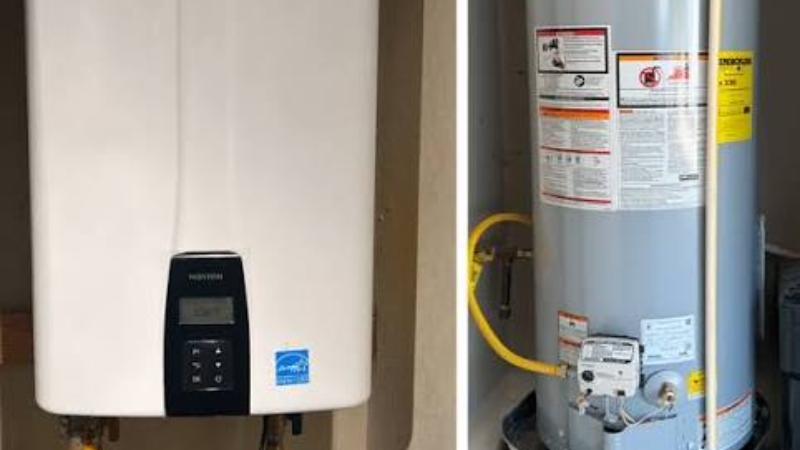
Tankless water heaters, also known as on-demand systems, heat water only when someone opens a tap. Since they do not store hot water, there is no stored supply losing heat overnight. This is where their energy savings come from. These units are also compact and mounted on walls, leaving more floor space available in a basement that you may want to finish later.
However, tankless systems are not automatically the best option. Consider the following factors carefully:
Flow rate is the limit, not volume.
A tankless heater can only heat a specific number of liter’s per minute. During winter, incoming water from the street is much colder, so the heater must increase its temperature by a greater amount. As a result, its effective capacity decreases. Running two showers and a dishwasher simultaneously may exceed the capacity of a unit that was selected for summer conditions.
Installation is more complicated.
A gas-powered tankless heater often requires a larger gas line and a different venting system than the tank it replaces. An electric model may also require a substantial electrical upgrade. The initial installation cost is generally higher than replacing an existing tank with a similar model.
Hard water has a greater impact.
Mineral scale can accumulate inside the heat exchanger, making regular descaling necessary. If you skip this maintenance, the system gradually becomes less efficient.
They generally have a longer lifespan.
A properly maintained tankless heater usually lasts several years longer than a traditional tank model. This longer lifespan helps balance some of the additional upfront expense.
A traditional tank heater remains a practical choice when your budget is limited or your existing gas line and venting system already support that type of unit. Regardless of which option you select, choosing the correct size is one of the most frequently rushed steps. Good water heater installation begins by assessing the household’s hot water demand during its busiest period and then checking the available supply and venting.
What You Can Safely Do Yourself
Most homeowners can handle a few basic maintenance tasks without professional assistance.
- Once a year, briefly lift the temperature and pressure relief valve lever and allow a small amount of water to flow through the discharge pipe. If the valve does not close properly again or continues dripping afterwards, it needs replacement.
- Once or twice a year, release a few liter’s of water through the valve at the bottom of the tank to remove loose sediment. Keep a bucket ready and remember that the water may be hot.
- Make sure the area surrounding a gas water heater stays free of boxes, paint cans and laundry. This allows the burner to receive enough air.
- Check the thermostat setting. There is a real balance to consider because lower temperatures reduce the risk of scalding, while higher storage temperatures help control bacteria inside the tank. Some households maintain a higher tank temperature and install a mixing valve. Ask a professional which arrangement is appropriate for your home.
Certain tasks should always be left to professionals. These include gas connections, venting systems and electrical supplies. An improperly vented gas heater can release carbon monoxide into your home. For this reason, replacing a water heater usually requires a permit. Check your local permit requirements before installing a replacement. If the relief valve does not work correctly or you notice moisture around the tank’s base, contact a plumber in Pickering or a licensed plumber near you for a proper inspection instead of waiting to see what happens.
Plan It Before It Plans You
The worst moment to select a replacement water heater is the morning your old unit floods the basement. You may end up choosing whichever model can be installed the fastest, without having enough time to consider the correct size or a possible tankless conversion.
If your current heater is getting older, make your decision while it is still working. A water heater you select carefully will almost always be a better choice than one you have to purchase in a hurry.
Click here for more details.