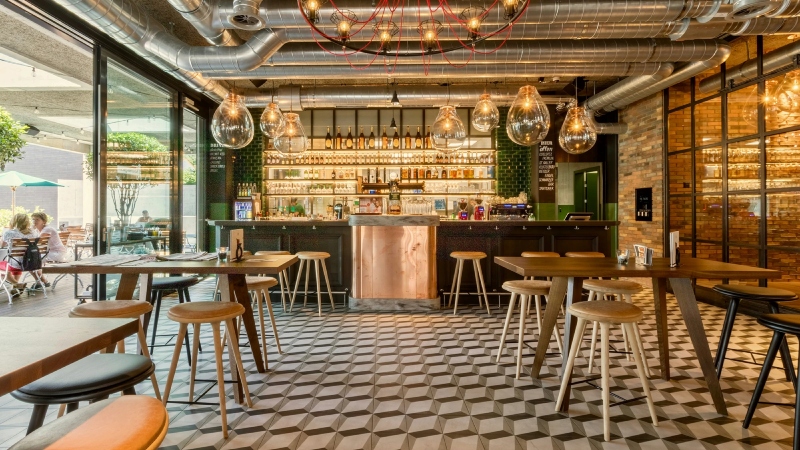
A restaurant is experienced long before the first dish arrives. The entrance, lighting, seating layout, materials and overall sense of space begin shaping a guest’s impression as soon as they walk through the door.
The challenge is to create an environment that feels distinctive without making everyday operations difficult. A successful restaurant interior must support the brand, guide guests comfortably and help staff work efficiently. When these elements are planned together, the space becomes more than a backdrop for dining; it becomes part of the experience itself.
Begin with the restaurant concept
The best interiors start with a clear idea of what the restaurant wants people to feel.
A relaxed neighbourhood restaurant may benefit from warm materials, softer lighting and a layout that encourages guests to stay. A fast-moving dining concept may need clearer circulation, durable finishes and a more direct relationship between the entrance, ordering point and seating. A premium restaurant may rely on proportion, restraint and carefully selected details to create a sense of occasion.
These differences should be decided before the decorative details are chosen. Once the concept is clear, the interior can express it consistently through colour, texture, furniture, lighting and spatial rhythm.
Plan the guest journey
Guests should be able to understand a restaurant without needing instructions. The entrance, host point, waiting area, dining space and service areas should connect in a way that feels natural.
A well-planned arrival creates confidence immediately. Guests should know where to go, where to wait and how the space is organised. Seating should provide comfort without making the room feel crowded, while tables should be positioned to give diners an appropriate level of privacy and connection to the atmosphere.
Small moments also matter. A framed view, a well-placed display, a change in ceiling height or a carefully lit feature can give the interior a memorable rhythm. These details help guide attention without competing with the food or the people sharing the space.
Protect the service flow
A restaurant may look beautiful, but it will struggle if staff have to work around the layout. Front-of-house and back-of-house movement should be considered from the beginning.
Servers need practical routes between tables, the kitchen, storage and service points. Deliveries, clearing, preparation and cleaning should not constantly interrupt guests. When the operational routes are planned carefully, the dining room can feel calmer and more polished because the work behind the experience is less visible.
This is one reason restaurant interiors should be developed with input from the people who understand daily operations. A design that looks efficient on paper may behave differently once the space is busy.
Use lighting to shape mood
Lighting is one of the most powerful tools in a restaurant interior. It influences how materials appear, how food is presented and how long guests feel comfortable staying.
A layered approach usually creates more depth than relying on one bright source. General lighting can make movement safe and clear, while focused lighting can draw attention to tables, artwork, architectural details or a feature counter. Decorative fixtures can also reinforce the identity of the restaurant when they are selected as part of the wider concept.
The lighting should be considered across different times of day. A space may need to feel fresh and welcoming during lunch, then more intimate and atmospheric during the evening.
Choose materials for beauty and use
Restaurant materials must withstand more than ordinary wear. They may face spills, frequent cleaning, heavy footfall, heat, moisture and constant contact with furniture and equipment.
That does not mean every finish needs to look industrial. Timber, stone, metal, glass and textured surfaces can all create a refined atmosphere when they are selected for the right locations and maintained properly. The important point is to understand how each material will perform in the areas where it is used.
Premium design often comes from contrast and restraint. A strong feature material can have greater impact when it is balanced by quieter surfaces around it. This keeps the room visually interesting without making it tiring or difficult to maintain.
Make the brand visible without overdecorating
A restaurant’s identity should be felt throughout the space rather than added as an afterthought.
Brand personality can appear in the choice of colour, the shape of the furniture, the tone of signage, the detail of the menu counter or the way guests move from one area to another. The result should feel coherent rather than overly branded.
When the design is consistent, guests can remember the restaurant more easily. The space becomes recognisable in photographs, in conversation and in the experience of returning for another visit.
Design for the next stage of the business
Restaurants often change after opening. Menus develop, service models are adjusted, and new opportunities may appear for private dining, events or additional locations.
Flexible furniture, adaptable lighting and carefully planned multi-purpose areas can give the interior more useful life. This does not require the restaurant to look temporary. It means the design has enough intelligence to support change without losing its character.
Choose a partner who understands both experience and operations
Restaurant owners looking for a specialist restaurant design should look beyond attractive visuals. The right design partner should be able to connect the brand idea, guest experience, service flow, materials, and practical delivery of the project.
That combination is what turns a concept into a restaurant that works. The space should look distinctive in photographs, feel comfortable to guests, and remain manageable for the team operating it every day.
The interior is part of the meal
A memorable restaurant is created through many decisions working together. The atmosphere begins at the entrance, continues through the layout and lighting, and is reinforced by the materials, service flow, and small details guests notice along the way.
When visual identity and operational needs are planned together, the interior can support the restaurant long after opening day. It becomes a place where the brand feels real, the team can work with confidence, and guests want to return.
Click here for more details.