Sooner or later, every homeowner hits the same moment: the garage door is acting up again, and you’re wondering whether to fix it one more time or start over.
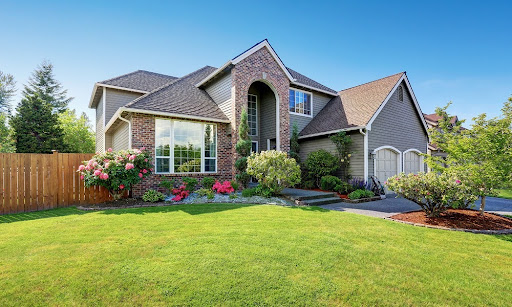
It’s a bigger decision than it looks. Your garage door is often the largest moving object in your home, it can take up a third or more of your home’s front view, and it opens and closes thousands of times a year. Getting the call right affects your safety, your energy bills, and your curb appeal.
The good news is that the answer is usually clearer than it feels. If you’re struggling to decide between repairing and replacing your garage door, you can Contact Us for professional guidance tailored to your situation. Here’s how to tell which problems are worth repairing, which signs point to a replacement, and how to make sure you’re getting honest advice.
Problems That Are Usually Just a Repair
Most garage door trouble comes from a single worn part, not the door itself. These are almost always worth fixing:
- A broken spring. It’s the most common garage door repair. The door suddenly feels like it weighs a ton, or the opener strains and stops. Springs wear out on a cycle count, and replacing them gives a healthy door years more life.
- Frayed or snapped cables. Cables work with the springs to lift the door. When one fails, the door may hang crooked or drop on one side.
- Noisy or worn rollers. Grinding, rattling or squealing usually points to rollers that have worn down. Swapping them often makes an old door noticeably quieter.
- A door off its track. Usually caused by a bump from a car or a worn roller. It needs prompt attention, but the fix is typically straightforward.
- A single dented panel. On many doors, one damaged section can be replaced without replacing the whole door, as long as matching panels are still available.
- Sensor or remote problems. Misaligned safety sensors and dead remotes cause a lot of “broken door” calls. These are quick fixes.
Signs It’s Time for a New Door
Replacement starts to make more sense when the problem is the door itself, or when repairs keep stacking up:
- Multiple damaged panels, or panels that are rusted through, cracked or warped. Wood doors that rot or split are especially hard to save.
- Repeated repairs. If you’ve had several service calls in a couple of years and another one is coming, that money may be better spent on a new door.
- Discontinued parts. Older doors can be hard to match. If a replacement panel isn’t available, a mismatched door may hurt your home’s look and resale value.
- No insulation. A thin, single-layer steel door lets heat and cold pour into the garage. If you use the space as a gym or workshop, or it sits under a bedroom, an insulated door can make a real difference.
- Safety and security worries. Very old doors may lack modern pinch-resistant panels, and older openers may lack today’s safety features and security codes.
- It’s time for a refresh. Remodeling industry studies consistently rank garage door replacement among the home projects that recover the highest share of their cost at resale.
As a rough rule of thumb, if a repair would cost close to half the price of a new door, and the door is more than 15 to 20 years old, replacement deserves a serious look.
Don’t Forget the Opener
The opener is a separate decision, and it often has its own clock. Many openers last 10 to 15 years, and a worn opener can make a healthy door seem broken.
Repairing the opener makes sense when a single part fails, such as a gear, a circuit board, a remote or a sensor, and the unit is otherwise in good shape.
Replacing it makes sense when the opener is loud, slow or struggling, when it lacks auto-reverse safety features, or when you want modern upgrades. Today’s openers offer belt drives that run much quieter than older chain models, battery backup for power outages, and smartphone control so you can check or close the door from anywhere.
One caution: an opener should never be used to make up for a door that’s out of balance. If the door is hard to lift by hand, fix the springs first. A new opener working against a bad spring will wear out fast.
Questions to Ask Before You Decide
The right technician makes this decision easier, not harder. Before you agree to anything, ask:
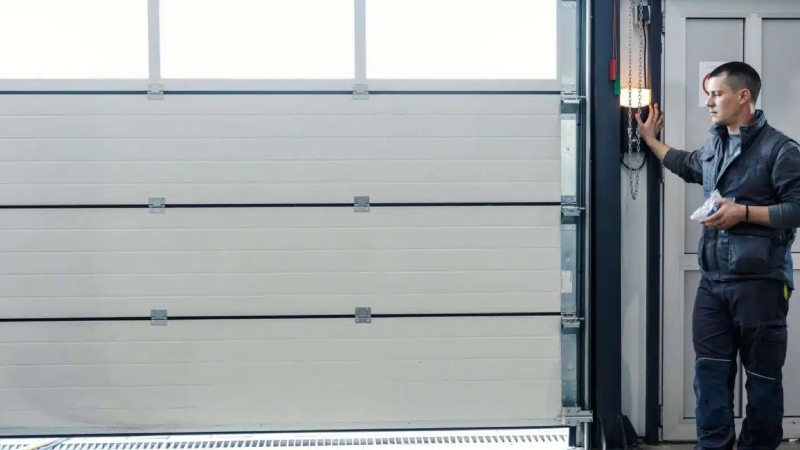
- What exactly failed, and can you show me? A good tech will point to the broken spring, the frayed cable or the worn roller.
- What does the repair cost, and what would replacement cost? You should get both numbers when the door is older.
- How much life does the rest of the door have? One repair on a solid door is very different from the first of many on a tired one.
- What warranty comes with the work? Ask about both parts and labor.
- Will your own employees do the job? Some companies hand work off to subcontractors, which can make warranty claims harder.
Watch for red flags: pressure to decide on the spot, a “today only” price on a new door, refusal to quote the repair, or a long list of add-on parts that weren’t part of the original problem. Unusually low phone quotes that jump once the tech arrives are another common warning sign.
Making the Call With Confidence
If your door is structurally sound and the problem is one worn part, repair it and enjoy the savings. If the door is old, damaged in several places, poorly insulated or costing you a steady stream of service calls, a replacement is likely the better investment.
Either way, a few minutes of regular care, like lubricating moving parts, testing the auto-reverse and listening for new noises, helps whichever door you end up with last longer.
And whatever you decide, one rule doesn’t change: springs and cables are under serious tension. Leave those repairs to a trained technician.
About the Author
This article was written by the team at Flash Garage Door Service, a family-owned garage door repair and installation company founded in North Texas in 2005. Flash now serves homeowners across Texas, Oklahoma, Louisiana and Georgia with its own in-house technicians, no subcontractors, and 24/7 emergency service.
Click here for more details.