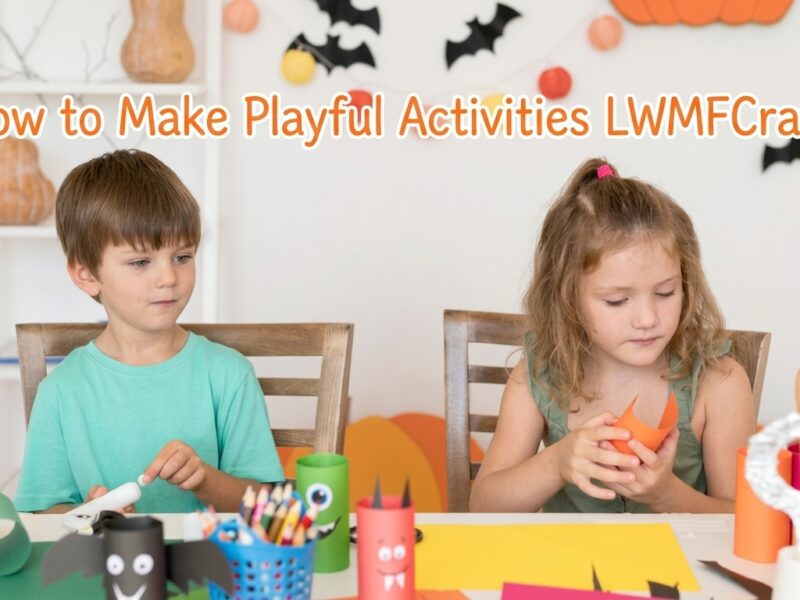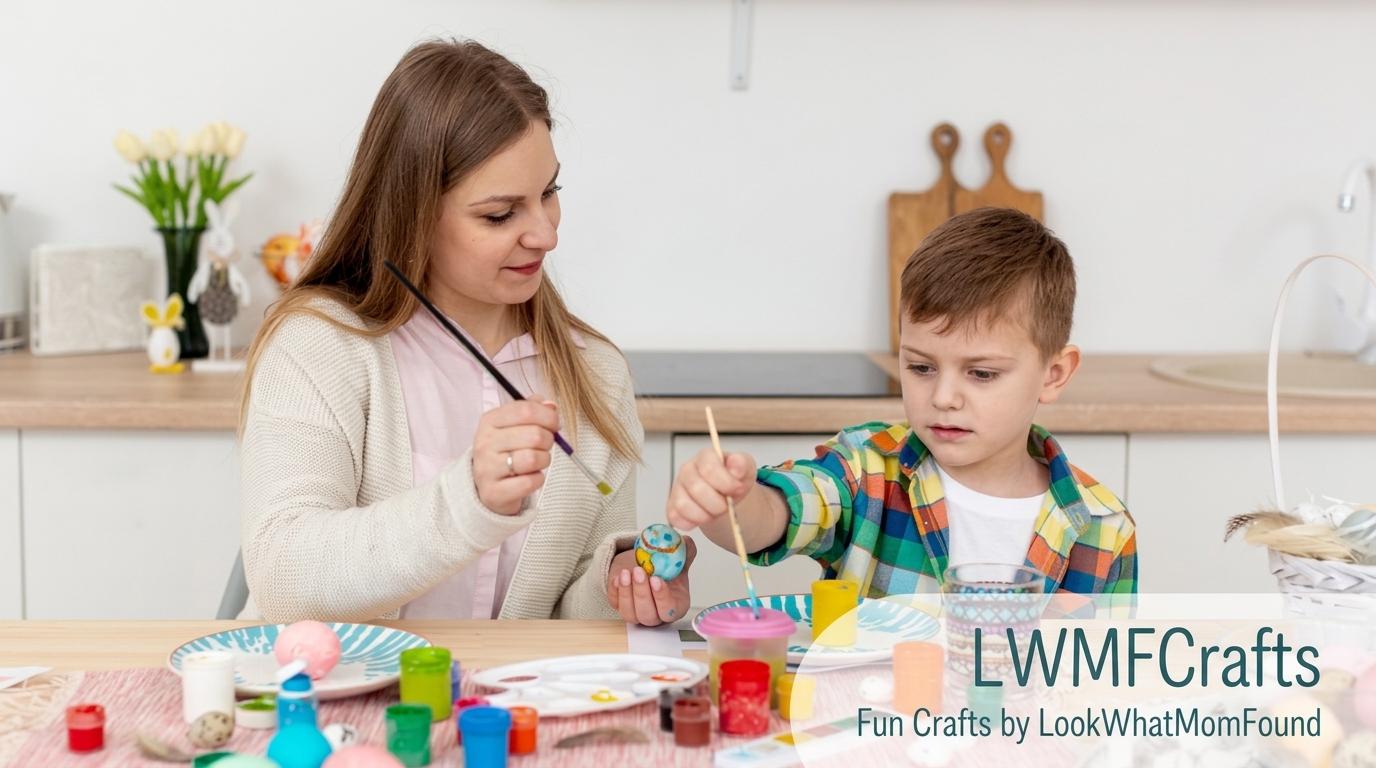
LWMFCrafts is the craft-focused arm of LookWhatMomFound…and Dad too!, a family blog run by Melinda and Rob. It publishes simple DIY, sensory, and seasonal projects built from everyday household items — buttons, ribbons, cardboard rolls, paper rolls, bottles, and fabric scraps — so families can start a craft without buying specialty supplies.
What LWMFCrafts Actually Is
The name causes more confusion than it should, so here is the plain version.
LWMFCrafts is the crafting section of a broader family-lifestyle blog. The parent brand covers parenting, kids, family life, product reviews, giveaways, recipes, and family travel. LWMFCrafts narrows that scope to hands-on making.
The site describes itself as the “crafty” part of the parent blog, focused on DIY, sensory, and seasonal projects using common household items. Its material list is deliberately unglamorous: buttons, ribbons, cardboard rolls, paper rolls, and other recyclables.
That constraint is the brand’s whole identity. These are not kit-based crafts that require a trip to a craft store. They are projects designed to be finished with what is already in a kitchen drawer or a recycling bin.
Who is behind it: Melinda and Rob, the mom-and-dad team behind the original parent blog. That matters for trust — the craft content sits inside an established family publication with a visible content history, not an anonymous idea aggregator.
Where the crafts live: the brand distributes across several surfaces. The website holds the written instructions and category pages. Pinterest carries an ideas board collecting the creative-activity content. Instagram posts short visual demonstrations. YouTube hosts video segments, including seasonal craft walkthroughs and themed crafting episodes aimed at moms and dads.
Each surface serves a different moment: browse on Pinterest, watch on YouTube, read the steps on the site.
Current State of the Brand and Its Web Presence
Three observations shape everything below.
First, the brand has a clear, defensible niche. “Crafts from everyday materials” is a real editorial position. It is specific enough to own and broad enough to sustain hundreds of pages.
Second, brand-name searches are being split. Several similarly named sites and domains exist around this brand name, including variant spellings and near-duplicate domain extensions. When a parent searches the brand name, they can land on a page that is not the original. This dilutes brand signals, splits link equity, and creates a trust problem the content alone cannot fix.
Third, the content mix is wider than the craft niche. The parent blog’s catalog includes giveaway posts, travel tips, recipes, and product reviews alongside crafts. That breadth is good for the brand but bad for topical focus if craft content sits in the same crawl and internal-link pool without separation.
Fourth, and most important for strategy: no product, shop, or paid offer was verifiable. The original brief labeled the search intent “commercial,” but the evidence points to an informational and brand-discovery model instead.Before adding commercial schema, product tables, or a “buy now” call to action, first confirm the monetization strategy. Otherwise, the whole conversion layer rests on an assumption.
Quick Reference Table: The Craft Filter
Use this to pick a project in under two minutes. It is the single most useful artifact in this guide, and it is the table a parent will screenshot.
|
Craft type |
Best age | Core materials | Mess level | Typical time incl. clean-up |
Best for |
|
Paper craft |
3–8 | Printer paper, construction paper, scissors, glue stick | Low | 15–25 min |
Fastest possible start; rainy afternoons |
|
Recycled cardboard build |
4–10 | Cardboard boxes, tubes, tape, markers | Medium | 30–60 min | Big builds; long screen-free stretches |
| Bottle & container craft | 3–7 | Clean bottles, caps, paint, glue | Medium | 20–35 min |
Fine motor practice; sensory input |
|
Fabric scrap craft |
5–10 | Fabric scraps, felt, yarn, blunt needle | Low–Medium | 25–45 min | Quiet, repeatable, low-stimulation projects |
| Seasonal / holiday craft | 3–10 | Seasonal template plus basic supplies | Varies | 20–45 min |
Holiday lead-up and family traditions |
|
Sensory play project |
2–5 | Bin, rice or water, scoops, food coloring | High | 20–40 min plus drying | Toddlers; calm-down and reset time |
| Group/classroom version | 3–10 | Pre-portioned kit per child | Medium–High | 30–45 min block |
20+ kids, parties, classrooms |
Two columns do the heavy lifting here: mess level and time, including clean-up. Most craft roundups list ideas without either, which is why parents abandon projects halfway through.
How to Choose a Craft Your Child Will Actually Finish
Most craft frustration is a selection problem, not a crafting problem. Four filters prevent it.
Filter 1 — Time. Match the project to your child’s attention span, not to your own ambition. A five-minute project that finishes beats a forty-minute project that collapses.
Filter 2 — Mess. Decide your mess tolerance before you browse, not after the paint is open.
Filter 3 — Supervision. Some projects need an adult hand the entire time. Others need one setup minute and a check-in.
Filter 4 — Materials on hand. If the craft requires a supply run, it is a weekend project. If it requires only what is in the bin, it is a today project.
Match the craft’s length to your child’s attention span
Rough bands that hold up in practice:
- 5–10 minutes: ages 2–4. Single-step, no drying time, no waiting.
- 15–20 minutes: ages 4–6. Two or three steps with a clear finish line.
- 30 minutes and up: ages 7–10. Multi-step builds, often spread across two sessions.
If a craft has a drying step, it is two sessions, not one. Plan for it or pick something else.
The mess-level rule, and why clean-up counts twice
Clean-up is not a footnote to craft time — it is part of it. A “20-minute craft” with a 15-minute clean-up is a 35-minute commitment.
High-mess formats — loose rice, water bins, food coloring, glitter — are excellent for toddlers and terrible for the twenty minutes before dinner. Save them for unhurried mornings.
Materials-first planning vs. idea-first planning
There are two ways to plan a craft, and they produce different outcomes.
Idea-first means finding a project you love, then buying supplies. It produces better-looking results and requires a trip, a budget, and lead time.
Materials-first means opening the recycling bin, seeing cardboard tubes and a bottle, and finding a project that uses them. It produces immediate starts and zero spend.
For everyday weeknights, materials-first wins almost every time. For birthdays, holidays, and gifts, idea-first is worth the effort.
Crafts by Age: Toddlers, Preschoolers, and School-Age Kids
Toddler crafts (2–3): sensory-first, zero small parts
At this stage, the process itself is what matters most. Toddlers are not building a keepsake; they are exploring texture, color, and cause and effect.
Prioritize large materials, taste-safe options, and formats with no loose small parts. Skip anything requiring precision placement or long waiting periods. Sensory bins, tear-and-paste collage, and large-format painting all work.
Preschool crafts (3–5): cutting, gluing, and following steps
This is where scissor skills, glue control, and simple sequencing develop. Crafts in this band should be chosen for the skill they build, not just the object they produce.
Blunt scissors, glue sticks rather than liquid glue, and three-step maximum instructions are the practical parameters. Paper crafts and simple container crafts fit well here.
School-age crafts (6–10): independence and longer projects
Older kids want ownership. The right move is to set up materials, explain the goal, and step back.
Recycled cardboard builds and fabric projects suit this band because they tolerate improvisation. If a younger sibling is crafting alongside, give the older child a role that adds difficulty — measuring, cutting, or designing — rather than making them wait.
Crafts by Material: Paper, Recycled, Seasonal, and Sensory
Paper crafts
Paper is the fastest category to start and the easiest to scale. It also has one real limitation: printable projects depend on a working printer and paper supply. When a printable is central to the craft, say so clearly up front so the reader is not surprised mid-project.
Recycled crafts from cardboard, bottles, and fabric scraps
Recycled crafts are the brand’s core strength, and they fail for one predictable reason: insufficient prep. A recycled craft only assembles well when the material is ready.
Pre-prep checklist for recycled materials:
- Clean — rinse bottles and containers; food residue ruins glue and paint adhesion.
- Dry — fully dry, not towel-dry. Damp cardboard warps.
- Cut — do the adult-only cutting before the kids arrive, especially on thick cardboard.
- De-label — remove labels and caps you do not want painted.
- Sort — group by size so children can choose without digging.
Seasonal and holiday crafts: when to plan them
Seasonal craft content gets consumed in advance of the season, not during it. Families who start a holiday craft the night before the holiday are already too late.
The practical habit: pick the seasonal project two to three weeks ahead, confirm materials in week one, and build in the final week. That leaves room for drying, mistakes, and a second attempt.
Sensory play projects
Sensory projects are the highest-mess, highest-value category for toddlers. They support regulation, language, and exploration — and they require the most supervision.
Contain them: one bin, one defined space, one clean-up plan decided in advance.
Group, Classroom, and Multi-Kid Craft Planning
Most craft content is written for one child. Teachers and group leaders are left to improvise, which is where the real information gap sits.
Scaling one craft for 20+ kids
The working math is materials × children × a spill factor. If each child needs four bottle caps, plan for at least ninety. If a craft needs glue, assume one glue station per four children.
Pre-portion everything into individual kits before the session. Distributing materials mid-activity is the single biggest source of chaos.
Prep-ahead and station setup
Budget roughly ten minutes of adult preparation per station. Lay out stations so children move in one direction, keep the drying area separate from the working area, and decide where unfinished projects go before the session starts.
A group craft that runs calmly is almost always a craft that was pre-portioned.
Common Craft Mistakes Parents and Teachers Make
- Too many steps. Anything past five steps loses most children under seven.
- No drying space. Wet projects need a flat, out-of-the-way surface. Plan it first.
- Glue-heavy construction. Liquid glue plus paper equals collapse. Glue sticks or tape for structural joints.
- Over-directing the result. Correcting a child’s craft to match the photo removes the point of the activity.
- Starting before setup. If the kids are called before the table is ready, the craft begins in chaos.
- Comparing to the reference image. Adult-made samples set an impossible standard. Show them as options, not targets.
- Skipping the material prep. Unwashed bottles and damp cardboard are the top cause of recycled-craft failure.
Keyword and Topic Cluster Map
This is the topical architecture the content should be built around. Each cluster targets a distinct intent and maps to a specific page type — which prevents internal cannibalization and gives search and answer engines clean, separable topics to index.
|
Cluster |
Representative queries | Intent | Page type |
Placement |
|
Brand/entity |
lwmfcrafts; lookwhatmomfound crafts; fun crafts by lookwhatmomfound | Navigational | Brand explainer hub |
H1, Quick Answer, one H2, FAQ |
|
Head informational |
fun crafts for kids; easy crafts for kids; simple craft ideas | Informational | Pillar guide | Primary H2s and the quick reference table |
| Age-modified | crafts for toddlers; preschool crafts; crafts for 7 year olds | Informational | Age-band sub-pages |
Age section, one page per band |
|
Material-modified |
paper crafts for kids; recycled crafts; crafts from cardboard tubes | Informational | Category pages | Material section, one page per material |
| Seasonal | fall crafts for kids; holiday craft ideas; Christmas crafts | Informational, seasonal | Seasonal hub + dated posts |
Seasonal section with lead-time guidance |
|
Group/classroom |
classroom crafts; craft station ideas; crafts for 20 kids | Informational, professional | Teacher-facing guide | Group planning section |
| Commercial investigation | craft supplies for kids; printable craft templates | Commercial | Comparison or resource page |
Only after monetization is confirmed |
The brand cluster must be covered once, thoroughly, and then left alone. Repeating the exact brand phrase across every heading is the fastest way to look machine-written.
Technical and On-Page Priorities
The content is only half the problem. These are the issues that suppress performance regardless of how good the writing is.
|
Issue |
Why it matters | Fix |
Priority |
|
Multiple similarly named domains around the brand |
Splits brand signals and confuses both users and crawlers | Consolidate on one canonical domain; do not link to unverified variants; reclaim or redirect variants where possible | Critical |
| Brand and craft content share one crawl and link pool | Dilutes topical focus; craft pages compete with giveaway and review posts | Separate craft content into its own silo with its own hub page and internal link structure |
High |
|
Thin seasonal posts published without lead time |
Seasonal demand peaks before the holiday; late publishing misses the window | Publish seasonal content 4–6 weeks ahead of the season | High |
| No age or mess information in page titles | Searchers filter by age and mess level, not by craft name | Add age band and mess level to titles, H1s, and the reference table |
High |
|
Craft pages without structured how-to steps |
Answer engines cannot extract a process from prose | Add clear ordered steps and, where a genuine project is written out, how-to structured data | Medium |
| Printable-dependent crafts not flagged | Users abandon projects mid-way when the printer is the blocker | State printer and paper requirements in the first paragraph |
Medium |
|
Group and classroom intent unaddressed |
High-value teacher queries have almost no dedicated coverage | Build a teacher-facing page per popular craft | Medium |
| Duplicate or overlapping craft posts | Internal cannibalization across similar ideas | Audit for overlap; merge and redirect near-duplicates |
Medium |
Internal Linking
Internal linking is where topical authority is either built or wasted.
Hub-and-spoke. One craft hub page links to every age band, material category, and seasonal hub. Each of those links back to the hub and sideways to one or two related pages — never to all of them.
Age to material, material to age. A toddler craft page should link to the sensory material page; a recycled material page should link to the school-age band. This cross-linking is what teaches a search engine that the site covers the topic in depth.
Keep brand content isolated. Giveaway, review, and travel posts should not be linked from craft pages. They belong to a different topic graph.
Two contextual links per page, maximum. More looks like manipulation and dilutes the signal.
Measurement
Track what actually reflects progress, not vanity metrics.
- Brand-name impressions and clicks — the clearest signal that the entity confusion is resolving.
- Cluster coverage — how many of the clusters in the table above have a dedicated, indexed page.
- Average position for age- and material-modified queries — the mid-tail where the site can realistically win.
- Scroll depth and time on page for craft guides — a proxy for whether the project was usable.
- Printable and template downloads — the strongest intent signal a craft site has.
- Return visits from the same users — parents who craft repeatedly are the real audience.
- AI answer citations — whether sections of the guides are being surfaced in generated answers.
90-Day Roadmap
|
Phase |
Days | Focus | Deliverables |
Primary KPI |
|
1. Consolidate |
1–30 | Fix entity fragmentation; separate the craft silo | Canonical domain decision, variant handling, craft hub page live, internal link structure defined |
Brand-name clicks to the correct domain |
|
2. Build depth |
31–60 | Fill the cluster gaps | One page per age band, one per material category, the group/classroom guide, quick reference table deployed site-wide | Indexed cluster pages; mid-tail average position |
| 3. Seasonal and scale | 61–90 | Publish ahead of the season; expand video and social | Seasonal hub published 4–6 weeks ahead, YouTube segments tied to site pages, printable and template assets |
Seasonal organic sessions; downloads; return visits |
Each phase depends on the previous one. Building depth before consolidating means pouring content into a diluted brand signal, and publishing seasonally before the hub exists means the pages have nowhere to link back to.
FAQ
What is LWMFCrafts?
LWMFCrafts is the craft section of the LookWhatMomFound…and Dad too! family blog. It publishes simple DIY, sensory, and seasonal craft projects for kids and families, built from common household materials such as cardboard rolls, paper, buttons, ribbons, bottles, and fabric scraps.
Is LWMFCrafts free to use?
The craft guides are published as free blog content. Any paid offer, printable pack, or product line should be confirmed directly on the site, since no paid catalog was verifiable in this research.
What age group are these crafts best for?
The projects span toddlers through school-age children, roughly ages 2 to 10. The age band matters more than the craft name — a sensory project suited to a two-year-old will bore a nine-year-old, and a multi-step cardboard build will frustrate a toddler.
What materials do I need for most projects?
Common household items: cardboard and paper rolls, paper, buttons, ribbons, bottles, fabric scraps, glue, scissors, and paint. The brand’s stated approach is to use everyday materials rather than specialty craft supplies.
Are these crafts low-mess enough for an apartment?
Many are. Paper crafts and fabric projects are low-mess by nature. Sensory bins, loose rice, water play, and food coloring are high-mess and better suited to a contained space or an outdoor table. Choose by the mess column in the reference table, not by the finished photo.
Can teachers use these crafts for a whole class?
Yes, with preparation. Pre-portion one kit per child, budget about ten minutes of adult setup per station, and assume a spill factor on every consumable. Group scaling is the weakest area in most kids’ craft content, so plan the logistics yourself rather than relying on the original post.
How is LWMFCrafts different from other kids’ craft sites?
The differentiator is the material constraint. Instead of building crafts around a supply list you have to buy, the projects are designed around what a household already has. That makes them cheaper and faster to start than kit-based craft content.
How do I start if I’m not crafty?
Pick one project from the reference table that matches your child’s age and your mess tolerance, confirm you have the materials, set up before you call the kids, and let the result be imperfect. A finished imperfect craft beats an abandoned perfect one.
Conclusion
LWMFCrafts has the rarest asset in the kids’ craft space: a specific, defensible editorial position built on everyday materials rather than purchased kits. The content opportunity is not more craft ideas — it is better craft decisions, organized by age, mess level, and total time including clean-up.
The work ahead is consolidation before expansion. One canonical brand presence, one clearly separated craft silo, then depth across age, material, seasonal, and classroom clusters. Parents searching for a craft they can actually finish tonight, and teachers searching for a craft that survives twenty children, are the two audiences worth owning.
Click here for more details.