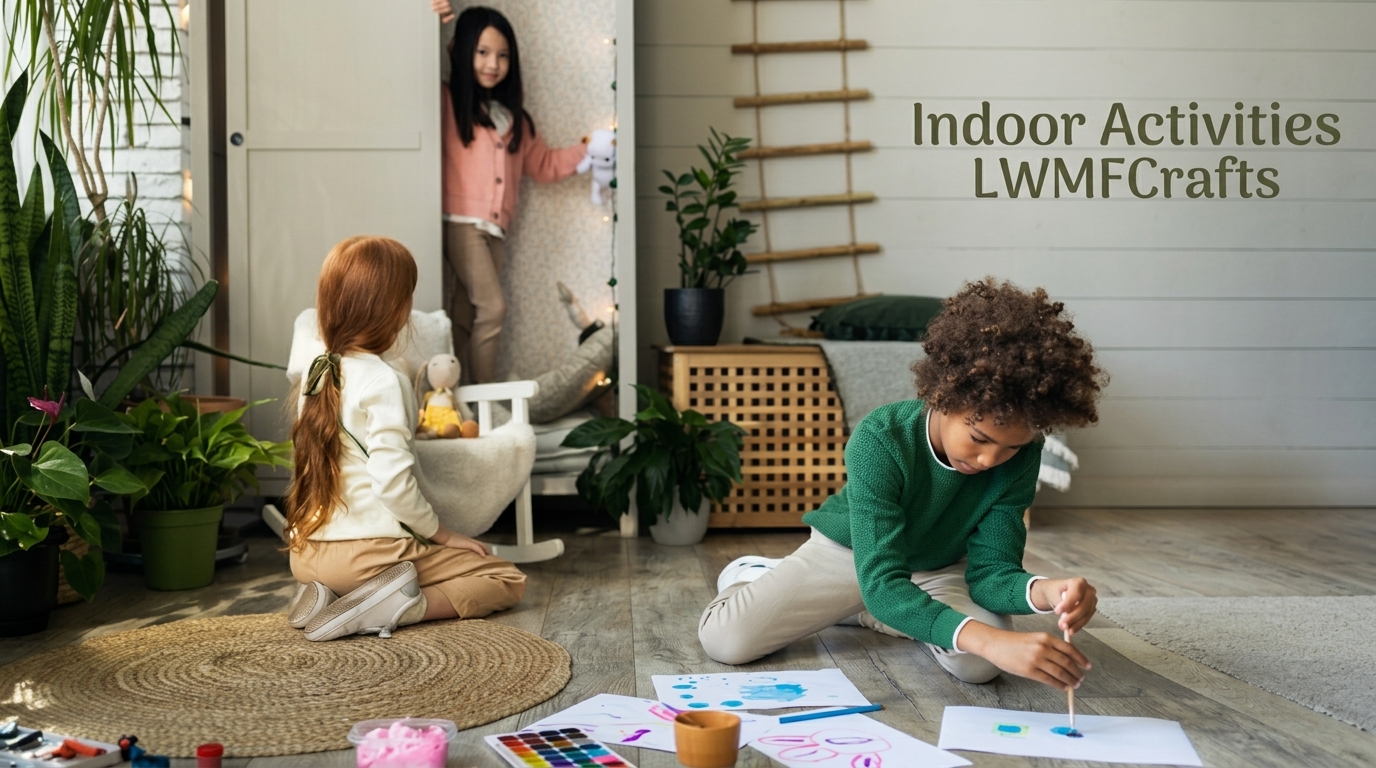
Indoor activities for kids are screen-free projects and games done inside using everyday materials — paper, cardboard, paint, fabric scraps, and household recyclables. Indoor activities work best when you match the activity to your child’s age band, your mess tolerance, and the time you actually have, not to how many ideas you can scroll past. The fastest way to choose is to filter by age, mess level, and real prep-plus-cleanup time before you pick anything.
LWMFCrafts, the creative activities section of the parenting and lifestyle site LookWhatMomFound, is built around exactly this kind of project: simple, hands-on, low-cost crafts for children, parents, and teachers using common household and recycled items. Its own framing is blunt about the goal — these are projects meant to replace another few hours of screen time, and they are designed to be doable on a random Tuesday afternoon.
This guide goes further than a list. It gives you a decision framework, an age-by-age breakdown, honest mess and time ranges, a safety check for toddlers, and a weekly rotation so you stop planning from scratch every single day.
What Counts as an Indoor Activity (and What Doesn’t)
Indoor activities split into three types, and most lists blur them together until the reader is confused about what they’re even choosing between.
Make. Crafts and building projects where the child produces something — a paper puppet, a painted jar, a cardboard castle. These need materials, a surface, and usually cleanup.
Move. Physical play that burns energy inside — obstacle courses, balloon volleyball, dance breaks, fort building. These need space and a little tolerance for noise.
Pretend. Imaginative play that needs almost nothing — story time, shadow puppets, indoor picnics, puppet shows, box-based dollhouse worlds. These need time and your occasional participation.
Knowing which lane you need changes everything. A sick day calls for Make or Pretend. A snow day with a wired six-year-old calls for Move. A rainy Sunday afternoon when everyone is bored of each other calls for all three in rotation.
The most useful takeaway here is simple: decide your lane before you browse. Most parents waste twenty minutes scrolling because they never asked whether they needed a craft, a workout, or a story.
The 60-Second Decision Framework: How to Choose an Activity Right Now
Don’t open a browser. Answer four questions in order, and each one eliminates options fast.
Four Filters, Applied in Order
- Age band. What can this child physically and cognitively do? A two-year-old cannot safely handle small beads. A nine-year-old will be insulted by finger painting. Age comes first because it removes the most options.
- Mess tolerance. Be honest, not aspirational. If you have twenty minutes before guests arrive and a cream-colored rug, you are not doing glitter. Mess tolerance should be your real limit today, not your ideal self.
- Time available. Count prep and cleanup, not just the fun part. A project described as “fifteen minutes” often means fifteen minutes of activity plus fifteen minutes of finding tape and wiping the table.
- Supervision level. Can you step away to start dinner, or do you need to sit at the table the entire time? Small parts, scissors, and liquid glue change the answer.
The Three-Bucket System
Once you’ve run the filters, drop your options into one of three buckets based on how much of your day it will consume.
The 5-minute reset. No setup, no cleanup, minimal supervision. Stickers, felt boards, magnetic tiles, coloring pages, threading cards, a deck of cards. These fill a gap between activities.
The 30-minute project. One table, one contained mess, one cleanup pass. Paper crafts, handprint art, cardboard building, perler beads, painted stones. These are the workhorse activities.
The afternoon build. Multi-step, occupies a long stretch, may span two days. Cardboard dollhouses, marble runs, decorated storage jars, a full pretend-world setup. These solve a long, empty afternoon.
The point of the framework is to stop scrolling and start choosing. Once you know your age band, your mess limit, your time, and your supervision capacity, most of the internet’s list is already irrelevant.
Quick Reference Table: Indoor Activity Types at a Glance
| Activity Type | Best Age Band | Core Materials | Mess Level | Real Time (incl. Cleanup) | Supervision | Best For |
| Paper crafts | 3+ | Paper, glue stick, blunt-tip scissors, crayons | Low | 20–35 min | Moderate (scissors) | Rainy afternoon, mixed ages |
| Recycled cardboard builds | 5+ | Boxes, tubes, tape, markers | Medium | 45–90 min | Light once started | Long empty afternoons |
| Bottle & container crafts | 4+ | Jars, bottles, caps, paint, glue | Medium | 30–50 min | Moderate (paint) | Gifts, room décor |
| Fabric scrap crafts | 6+ | Fabric scraps, yarn, felt, glue | Low–Medium | 30–60 min | Moderate (scissors) | Kids who like texture and sewing-lite |
| Sensory play | 1–4 | Taste-safe dough, rice bin, water, bins | High (contained) | 20–40 min | Constant | Toddlers, oral exploration |
| Seasonal & holiday crafts | 4+ | Paper, paint, natural finds, glue | Medium | 30–60 min | Moderate | Countdowns, traditions |
| Group & classroom versions | 5+ | Multiples of any of the above | Medium–High | 40–60 min | Two adults ideal | Parties, classrooms, playdates |
How to read this table: Time values are realistic ranges based on typical family setups, not measured lab data — treat them as planning guidance, not a stopwatch. Mess level assumes the container-and-tray approach described later; skip the tray and every row moves up one level.
What the table deliberately leaves out: price (it varies too much to be useful), a difficulty score (age band and supervision already cover it), and seasonality (handled by its own row).
Indoor Crafts for Kids by Age Band
The trick most roundups miss: one activity concept can serve three different ages if you change the step. Here’s how the same ideas scale.
Toddlers (About 1–3): Sensory and Safe-Material Play
Toddlers explore with their mouths, so materials matter more than the craft itself.
Taste-safe playdough. Mix flour, salt, water, and a little oil; add food coloring if you like. Let them squeeze, poke, and flatten. No finished product needed — the kneading is the activity.
Sensory rice bin. Pour dry rice into a shallow bin with a few large scoops and cups. Add a towel underneath. Skip anything small enough to swallow.
Tear-and-paste collage. Give them scrap paper to tear and a glue stick. They stick pieces onto a larger sheet. Tearing builds hand strength.
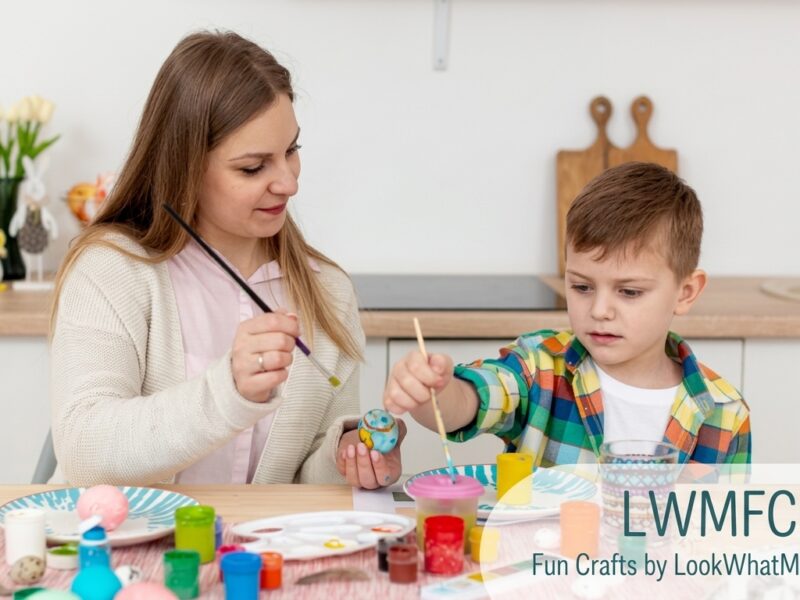
Big-format finger painting. Tape a large sheet to the floor or a tray. Use washable, non-toxic paint. Expect hands, arms, and possibly hair.
Age note: For toddlers, constant supervision isn’t optional — it’s the whole safety plan. Keep every piece larger than a small-parts testing cylinder.
Preschoolers (About 3–5): Cutting, Gluing, and Simple Assembly
This is where scissor skills and following two or three steps come in.
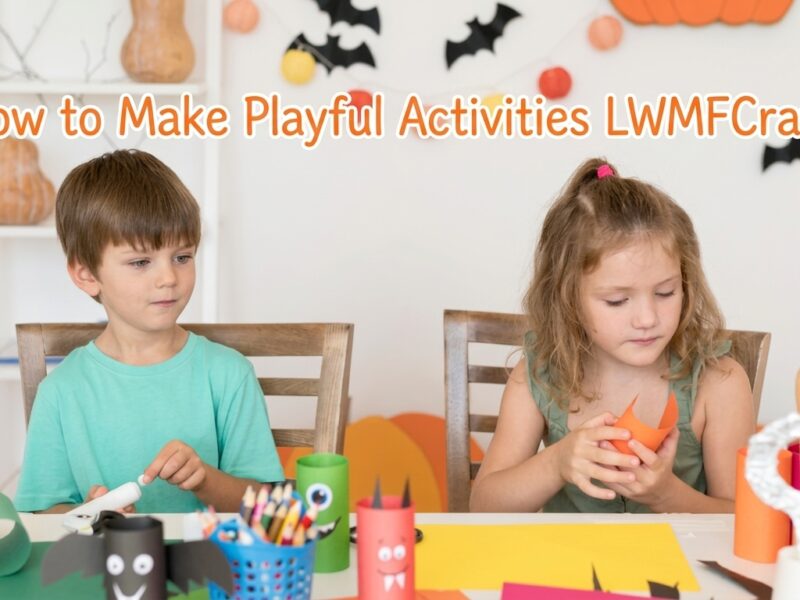
Paper-plate faces. Draw or glue features onto a paper plate. Add yarn hair, button eyes (supervised), or torn paper cheeks.
Paper-bag puppets. Decorate a lunch bag with markers, glued shapes, and yarn. Then put on a show — the craft becomes play.
Handprint animals. Trace or stamp a handprint, then add legs, ears, and a face. Great keepsake and a fine-motor workout.
Sticker scenes. Give a sheet of stickers and a background. Ask for a story about the finished picture.
Age note: Blunt-tip safety scissors exist for a reason. Introduce them with close adult supervision, use them only for craft materials, and never let a child run with them.
School-Age (About 6–10): Multi-Step Builds
Kids this age can plan, troubleshoot, and work independently for longer stretches.
Cardboard constructions. Save boxes and tubes. With tape and markers, they build castles, cars, robots, or entire towns.
Marble runs. Tape cardboard tubes to a wall or box lid and test angles until the marble makes it down. This is engineering disguised as play.
Painted storage jars. Clean a glass jar, paint or decoupage it, and use it for pencils or treasures. Supervise around glass.
Bead projects. Perler beads, friendship bracelets, or simple bead patterns build patience and pattern recognition.
Simple STEM builds. Volcano models, weather charts, and paper structures that must hold weight.
Age note: Kids this age handle scissors and glue independently, but glass, hot glue, and knives remain adult tools.
Tweens and Teens (About 11+): Independent and Expressive Projects
Older kids want personal expression and independence, not a cute craft.
Decorated notebooks. Cover a plain notebook with fabric, paper, or paint. Add a name in their own style.
Bead bracelets. Friendship bracelets, letter beads, and color-coded designs stay popular across this age range.
Painted storage and room décor. Jars, boxes, and canvases they actually want in their room.
Posters and wall hangings. Give them a blank surface and let them run the design.
Timed craft challenges. A theme, a box of materials, twenty minutes, and a timer. This turns crafting into a game.
Age note: Give them the materials and step back. Interference kills interest at this age faster than boredom does.
Low-Mess Indoor Crafts for When You Don’t Want to Clean Up
Mess isn’t a personality trait — it’s a variable you design around. Choose your level deliberately.
Truly Mess-Free Options
Stickers and sticker books. Rubber stamps. Dry-erase boards and windows. Felt boards. Magnetic tiles. Threading and lacing cards. Printable coloring pages. These need nothing more than a flat surface, and cleanup is closing a lid.
Contained-Mess Options
The container is the boundary. Put the whole activity inside a shallow bin, a baking tray, a box lid, or the bathtub. Paint, rice, water, and dough all stay put when the walls are high enough. Add a cheap tablecloth or a flattened trash bag underneath for insurance. When the container is the limit, “messy” crafts become manageable ones.
The 10-Minute Reset
The biggest mistake with indoor crafts is treating every project as finish-or-throw-away. Instead, build a reset routine: materials back in the bin, bin capped, table wiped, and the project parked for later. A half-finished cardboard castle is not clutter — it’s tomorrow’s activity already set up.
Practical takeaway: Pick one mess-free option and one contained-mess option and keep both stocked. You now have a fallback for every day you don’t have the energy to set anything up.
Recycled-Material Crafts: What’s Actually Worth Keeping
The recycling bin is the cheapest craft supply in your house — but only if you’re selective.
The Keep List
Cardboard boxes and tubes. Egg cartons. Clean plastic bottles and caps. Jar lids. Paper grocery bags. Fabric scraps. Buttons. Ribbon. Milk jugs. Toilet paper tubes. Newspapers and junk mail. All of these become containers, stamps, building blocks, and raw material.
What you can make: a dollhouse from an empty box, toy cars from egg cartons, stamps from jar lids, a marble run from tubes, a robot from a milk jug and caps, a puppet from a paper bag.
The Skip List and Why
Skip anything sharp, rusted, or previously holding chemicals or cleaners skip broken glass. Skip anything that once contained food you can’t fully wash. And skip — or strictly supervise — anything small enough to be a choking hazard if a child under three is in the house. A cluttered recycling stash is not a supply closet; it’s a safety question.
How to Store It Without a Craft Room
One bin. One size limit. A weekly purge. If the bin is full and something new arrives, something old goes. This one rule keeps the stash usable instead of becoming a corner of the garage nobody touches. Do not save every box “just in case” — save the good ones and recycle the rest without guilt.
Screen-Free Indoor Activities That Aren’t Crafts
Not every closed-door day is a craft day. Some kids hate crafts, and some days the issue is energy, not boredom.
Energy Burners (High Movement)
Cushion obstacle course. Line up pillows to jump, a rope to balance on, and a table to crawl under. Change the route every round.
Tape line games. Painter’s tape on the floor becomes a balance beam, a hopscotch grid, or a starting line.
Balloon volleyball. A balloon, a line across the room, and hands only. Slow-motion, low-risk, and endlessly repeatable.
Indoor scavenger hunt. Give a list of things to find — something blue, something soft, something round. Older kids can write their own list.
Dance break. Three songs, full effort, done. It resets the mood faster than almost anything.
Fort building. Chairs, blankets, and clothespins. The fort is the activity, and the play inside it is the bonus.
Quiet, Low-Energy Activities
Story time. Shadow puppets on a wall with a flashlight. An indoor picnic on a blanket. Board games and card games. Puzzles. Audiobooks and story players. Building toys. Reading in a pillow nest.
The Weather-and-Energy Matrix
Don’t match activities to the weather alone. Match them to your child’s state.
- Sick day → quiet, low-mess, low-movement. Story, puzzle, audiobook, felt board.
- Rainy day → contained craft or quiet pretend play.
- Snow day (stuck inside, full energy) → movement first, then a long build.
- Late afternoon, everyone tired → 5-minute reset, then screens or free play.
- Playdate or group → group craft or obstacle course with clear rules.
Practical takeaway: Energy level, not age alone, tells you whether you need to burn something off or settle something down.
Safety, Supervision, and Choking Hazards: Check This First
Before you hand over any materials, run a 30-second pre-flight check.
The Under-3 Rule
Small parts are the leading injury risk for young children. Products intended for children under three must not contain or release small parts that present choking, aspiration, or ingestion hazards. In practice, this covers buttons, beads, pom-poms, googly eyes, small caps, coins, marbles, and anything that fits inside a small-parts testing cylinder.
The rule is not “never use small parts.” The rule is supervised use with an adult present and full attention versus unsupervised access, which should never happen with a child under three in the house.
Scissors, Glue, and Paint by Age
- Scissors: Blunt-tip safety scissors, introduced under close adult supervision, typically in the preschool years. Teach the rules plainly — never run with scissors, never use them on anything but craft materials, always point them away from your body.
- Glue: A glue stick is the safest starting point for toddlers and preschoolers. Liquid glue and hot glue are for older kids and adults respectively.
- Paint: Use non-toxic, washable, water-based paint. Open craft blades or carving tools should never be in a child’s hands.
The 4-Point Pre-Flight Check
- Small parts? If yes, direct supervision or substitute something larger.
- Sharp edges? Glass, metal, or cut plastic needs adult handling.
- Toxic or unknown material? If you don’t know what it is, it doesn’t go on the table.
- Can I step away? If no, plan the activity for a time when you can sit with them.
Practical takeaway: Run these four checks before the craft comes out, not after it’s spread across the table. Thirty seconds of prevention beats an emergency room trip every time.
Materials and Cost: A Pantry-Ready Supply List
You do not need a craft room. You need about ten items and a willingness to substitute.
The Core Kit
Paper — printer paper and construction paper. Glue sticks. Kid-safe blunt-tip scissors. Washable paint. Markers and crayons. Tape. Cardboard stash. Yarn. One plastic storage bin. One table cover or old sheet.
That’s it. Everything else is optional and accumulates over years, not purchases.
Substitutions When You’re Missing Something
- No glue stick? Tape, or a simple flour-and-water paste.
- No craft paint? Washable markers work for most paper projects.
- No construction paper? Junk mail, grocery bags, and printer paper do the job.
- No yarn? Strips of old fabric or ribbon.
- No beads? Paper clips, pasta, or cut straws — supervised around little ones.
- No table cover? A flattened trash bag or a painter’s drop cloth.
Cost Framing
The LWMFCrafts approach is built around common household items and recyclables, so most projects need little or nothing purchased. One well-stocked bin you maintain across years will beat a drawer of one-off specialty supplies every time. Avoid buying single-use craft kits for a project you’ll do once — that’s how craft supplies become clutter instead of a resource.
Practical takeaway: Before you shop, look in the recycling bin. Most indoor activities are already in your house.
Applying the LWMFCrafts Approach: Simple, Low-Cost, Repeatable
LWMFCrafts is the creative-activities section of LookWhatMomFound, a parenting and lifestyle site that also covers family content, recipes, giveaways, and DIY inspiration. The craft section itself focuses on hands-on projects for children, parents, and teachers, built from common household and recycled items, and framed explicitly as an alternative to extra screen time. Its activities span a wide range, from sensory play for toddlers to independent projects for older children and teens, including paper crafts, sensory bins, recycled creations, seasonal activities, and basic science models.
What the Approach Actually Is
The principles are the useful part, and they’re worth naming clearly:
- Short instructions. If it takes longer to read than to set up, people won’t use it.
- Minimal setup. Materials come out fast and go back fast.
- Low mess by design. Contained crafts beat chaotic ones for repeat use.
- A rotation, not a new idea daily. Repeat favorites instead of chasing novelty.
A Weekly Rotation That Removes Daily Decisions
Inventing a new activity every day is what makes indoor play exhausting. A rotation fixes it. Here’s a simple one:
- Make Monday — a craft or build.
- Move Tuesday — an energy-burning game.
- Quiet Wednesday — puzzles, reading, or story time.
- Build Thursday — cardboard or construction project.
- Pretend Friday — fort, puppet show, or indoor picnic.
- Free Saturday — let them choose from the week’s favorites.
- Reset Sunday — restock the bin, purge the recycling stash, park unfinished projects.
Practical takeaway: Post the rotation on the fridge. When a child says “I’m bored,” you point at the day, not a screen.
Common Mistakes Parents Make with Indoor Activities
Every one of these is preventable, and each has a one-line fix.
Picking an activity above the child’s real ability. Frustration hits within ninety seconds. Fix: match the age band and scale the step down, not the whole project.
Skipping prep. Ten minutes hunting for tape kills all the momentum you built. Fix: read the materials list first and pull everything out before you announce the activity.
Underestimating cleanup. A “fifteen-minute craft” becomes a forty-five-minute event. Fix: count prep and cleanup in your time filter, and use trays.
Buying specialty supplies for a one-off. Cost and clutter with no repeat use. Fix: default to household and recycled materials first.
Treating screens as the only alternative. This is a false binary, and it’s worth saying plainly: screens aren’t inherently harmful, and screen-free time is a reduction goal, not a moral position. Structured time without screens is one tool among several, not a verdict on your parenting.
Doing the craft for the child. The product looks better, and the child learns less. Fix: let it look messy. The process is the point.
Practical takeaway: Most indoor activity failures happen before the child sits down. Fix the setup and the activity usually works.
Practical Takeaways: Your Indoor Activity Action Plan
The Fridge Checklist
Before any indoor activity, run down this list:
- Age band — what can this child actually do?
- Mess tolerance — what’s my real limit today?
- Time — including prep and cleanup.
- Materials — do I have everything out already?
- Supervision — can I sit here, or do I need to substitute?
- Containment — tray, bin, or table cover in place?
The 7-Day Starter Rotation
Use the weekly rotation above, but keep one rule: always have a 5-minute reset option stocked as a fallback. Stickers, felt board, magnetic tiles, coloring pages. On the days when nothing else works, that fallback is the difference between a manageable afternoon and a meltdown.
Practical takeaway: Attach the checklist to the fridge and screenshot the rotation. In a week, choosing an indoor activity stops being a decision and becomes a habit.
Frequently Asked Questions
What are some easy indoor activities for kids with no prep?
Stickers and sticker books, felt boards, magnetic tiles, threading and lacing cards, and printable coloring pages all work with zero setup. Keep them accessible in one reachable bin, and they become the activity your child can start without asking you to find anything. These are the best options for filling a short gap or rescuing a rough afternoon.
Are LWMFCrafts indoor activities free?
Mostly, yes. The approach is built around common household items and recyclables, so many projects need little or nothing purchased. You’ll still want a small core kit — paper, glue stick, kid-safe scissors, washable paint, markers — but one maintained bin covers the vast majority of projects. Specialty supplies are optional, not required.
What indoor activities are safe for a 2-year-old?
Anything large, taste-safe, and non-toxic. Taste-safe playdough, sensory rice bins, large-item sorting, tear-and-paste collage with a glue stick, and big-format finger painting with washable paint. Skip beads, buttons, pom-poms, googly eyes, coins, and anything that fits inside a small-parts testing cylinder. A two-year-old needs constant, hands-on supervision with any craft material.
How do I keep indoor crafts low-mess in a small apartment?
Change the container, not the craft. Put the whole activity inside a shallow bin, baking tray, or box lid, add a flattened trash bag underneath, and treat the container as the boundary. Stickers, dry-erase surfaces, felt boards, and magnetic tiles are genuinely mess-free. Water-based paints and washable markers stay manageable in small spaces with a table cover.
What can kids do indoors without screens for two hours?
Stack three activities instead of looking for one long one. Start with a movement game to burn energy, follow it with a thirty-minute build or craft, and finish with something quiet like puzzles, reading, or an audiobook. Two hours disappears quickly when the energy level changes, and the parked-project strategy means the build can continue the next day.
Is it OK if my child isn’t interested in crafts?
Yes, entirely. Not every child enjoys making things, and forcing crafts creates the resistance you’re trying to avoid. Move to the Move or Pretend lane instead — obstacle courses, fort building, puppet shows, indoor picnics, and card games all count as screen-free indoor activity. Match the activity to your child, not to a list.
What age can kids use scissors and glue on their own?
Blunt-tip safety scissors typically come into use during the preschool years, with close adult supervision and clear rules about use. A glue stick is safe earlier than liquid glue. Kids usually handle scissors and glue independently around age six and up, while glass, hot glue, and craft knives remain adult tools well into the tween years. Supervision should taper with demonstrated responsibility, not with age alone.
Conclusion
The best indoor activity is the one that matches your child’s age, your mess tolerance, and the time you actually have — not the longest list you can find. Pick a lane, run the four filters, and pull everything out before you announce the project, and most of the friction disappears. Keep one 5-minute fallback stocked and a simple weekly rotation on the fridge, and you’ll stop improvising every afternoon. Start today with what’s already in your house: a box, some paper, a glue stick, and twenty minutes.
Click here for more details.