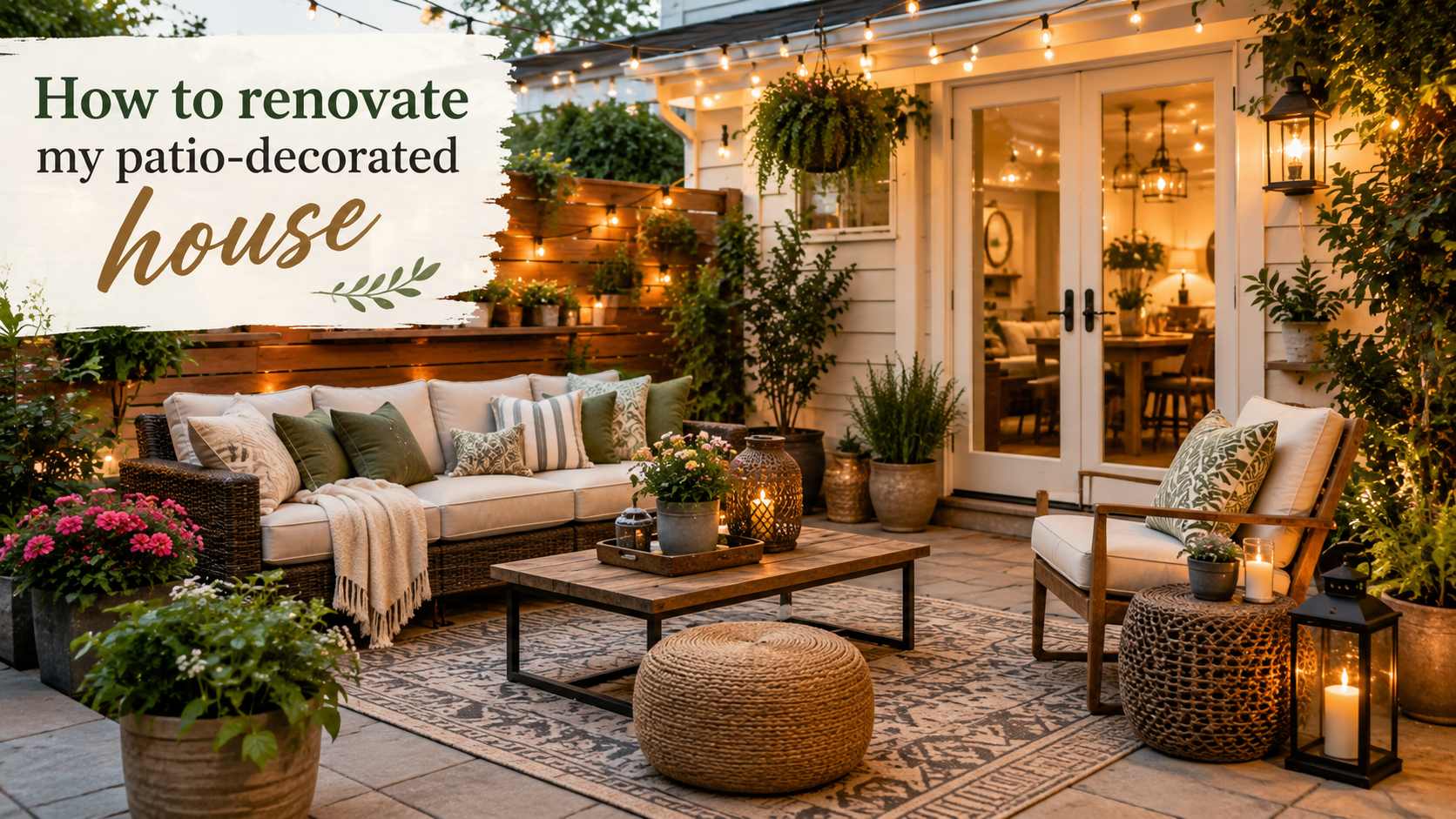
If you’re searching for how to renovate your patio decor at a house, you probably want more than pretty pictures. You want a patio that feels calm, useful, and easy to enjoy. That’s the goal here. The goal is to create a space that is simple, practical, and stylish without turning your backyard into an expensive project. A great patio works like an outdoor living room. It gives you a place to eat, rest, talk, and breathe. Done well, it also makes your home feel larger. With a thoughtful layout and carefully selected outdoor décor, even a compact patio can look inviting, modern, and well-designed.
Start with a clear vision
Before you buy anything, decide what the patio needs to do for you. The best way to approach renovating my patio decor is to think about daily life first. Think about how you want to enjoy the space—whether it’s peaceful mornings with coffee, shared family meals, or a warm setting for guests and evening conversations. Next, look at the space with honest eyes. Notice where the sun hits, where water sits, and where the view feels awkward. These details shape every later choice. A well-planned patio helps you stay within budget and prevents impulse purchases that could create a cluttered or mismatched outdoor space.
Quick patio audit
Spend time on your patio during the morning, afternoon, and evening to see how the space changes throughout the day. Check shade, wind, privacy, noise, and traffic flow. Measure the full area. Then measure doors, steps, and walls. Those numbers matter more than trends because good space planning always beats rushed makeover ideas.
Set a budget that works in real life
You don’t need a huge budget to make a patio look expensive. You do need priorities. Put your money into repairs, flooring, shade, and seating first. Leave small accents for later. That order gives you a stronger renovation budget and better long-term value. A simple budget often works best in three parts: structure, comfort, and style. Structure covers surfaces and drainage. Comfort includes furniture and shade. Style handles color, plants, and accessories. When you split spending this way, your outdoor renovation stays focused and your home upgrade feels balanced.
Repair the bones before the beauty
A patio makeover should never begin with cushions and lanterns if the surface is cracked, loose, or uneven. Fix the base first. That means checking slabs, joints, edges, and step height. Strong foundation work gives your patio a clean look and much safer foot traffic. If water heads toward your back door, solve that problem before anything else. According to HGTV, a patio connected to a back door should be built about 1.5 inches lower than the door threshold to reduce the risk of rainwater entering the home. That’s not glamorous advice. It’s drainage that protects your home’s exterior.
Drainage matters more than decor
A patio can look gorgeous and still fail if rainwater has nowhere to go. Watch where puddles form after a storm. If needed, regrade the area, add a channel drain, or choose a more permeable surface. Good water control quietly protects both your patio design and your wallet.
Choose the best surface for your style and climate
For homeowners searching for how to renovate my patio decoradhouse, choosing the right flooring is usually one of the most important decisions in the entire project. It changes the whole mood. Concrete feels clean and modern. Brick feels warm and classic. Stone feels natural. Gravel feels relaxed and budget-friendly. Your patio surface sets the tone for every other decor choice.
Material choice should match your weather, maintenance level, and design taste. HGTV highlights concrete, brick, flagstone, tile, gravel, and pavers as common patio options. HowStuffWorks also explains that stone lasts well, pavers are easier to replace, and brick adds warmth with pattern. That mix of durability and style is what matters most.
Patio material comparison table
| Material | Best for | Main advantage | Watch out for |
| Concrete | Modern patios, clean lines | Budget-friendly and flexible in shape | Can crack or feel plain |
| Pavers | Family patios, easy repair | Individual pieces are replaceable | Needs a solid base |
| Brick | Traditional homes | Warm color and timeless patterns | Weeds may grow between joints |
| Natural stone | Organic, high-end look | Rich texture and long life | Higher cost and uneven feel |
| Porcelain or exterior tile | Sleek finish | Sharp look and easy cleaning | Can get slippery if poorly chosen |
| Gravel or decomposed granite | Casual patios, drainage zones | Affordable and permeable | Moves underfoot and needs edging |
Break the patio into useful zones
A patio feels more expensive when it has clear zones. You don’t need walls. You just need purpose. Create one spot for dining, another for lounging, and maybe a compact corner for grilling or plants. Strong zoning makes a simple patio feel like a well-planned outdoor room.
You can separate zones with rugs, planters, lighting, or changes in material. HGTV highlights how patterns and surface changes help define dining and lounge areas. This approach is effective because the eye naturally views a space as a series of visual layers. A better visual flow makes the patio feel calm instead of crowded.
Zoning helps small patios feel bigger
Small patios often fail because everything gets pushed against the edge. Try floating one seating group instead. Use a rug under chairs or place two planters as anchors. Those moves create structure without bulk and give your small patio a more open and intentional rhythm.
Pick furniture that fits the space
Big furniture can swallow a small patio in seconds. Start with scale, not style. Measure the footprint of every chair, bench, and table before buying. Leave room to walk naturally. Comfortable outdoor furniture should support movement instead of forcing you to squeeze around every coffee table.
Choose fewer pieces that do more. When space is limited, a storage bench is often a smarter choice than using two oversized chairs. Stackable seats help during parties. A round table softens sharp corners and improves flow. Smart multifunction furniture makes your patio more flexible and keeps the layout from feeling heavy.
Add shade before summer proves you wrong
A patio without shade can become a no-go zone in hot weather. That’s why shelter matters early in the renovation plan. Umbrellas, pergolas, canopies, and shade sails each solve a different problem. The right shade solution improves comfort fast and protects your outdoor seating from harsh sun.
Choose a shade based on how you use the space. A dining area often works well with a centered umbrella. A lounge zone may need a pergola or sail for wider coverage. If the sun shifts all day, flexible coverage usually works better than a fixed overhead design.
Match shade to the way you live
Think about timing. If you only use the patio in the evening, a giant structure may be overkill. If you host weekend lunches, you need stronger coverage. Your shade should follow your habits. That simple lifestyle match keeps the patio useful and stops costly overbuilding.
Use plants to soften hard edges
Patios can look stiff when every surface is hard. Plants fix that. They add movement, color, and softness without major construction. Use tall plants for privacy, medium ones for shape, and trailing ones for charm. Thoughtful container gardening gives your patio warmth and easy seasonal color.
Don’t scatter planters at random. Group them in odd numbers and vary the heights. Try one large statement pot instead of five tiny ones. Herbs near the table also feel friendly and useful. A patio with layered greenery always feels more alive than one filled only with decor accessories.
Layer lighting for mood and safety
Lighting does two jobs at once. It helps people move safely and makes the patio feel magical after dark. Use more than one type. HGTV points to path lights, uplights, and decorative lights for different effects. That layered outdoor landscape lighting approach creates both function and atmosphere.

A big part of how to renovate my patio-decorated house is making the space inviting at night, not just during the day. String lights add charm. Step lights improve safety. Table lanterns add a glow close to the eye. Together, those layers give your evening patio a softer and more finished designer feel.
A simple lighting formula that works
Start with one safety layer, one ambient layer, and one accent layer. That means path or step lighting, then string lights or sconces, then a spotlight on a plant or wall. It sounds fancy. It isn’t. This easy lighting plan gives your patio real depth.
Make vertical space work harder
When floor space is limited, look up. Fences, walls, and posts can carry a lot of style. Hang outdoor art, mount shelves, train climbing plants, or add slim sconces. Using vertical space makes the patio feel curated while keeping the walking area open and easy to use.
Privacy screens also help more than people think. They block awkward views, soften wind, and create a cozy feeling. Even a simple slatted panel can transform the mood. The trick is to use one clean backdrop instead of piling on too many competing wall features.
Build a color palette and stick to it
Too many colors can make a patio feel busy fast. A tighter palette feels more polished. Start with one main neutral, one natural tone, and one accent color. That trio gives you freedom without chaos. A smart color palette helps every pillow, pot, and rug work together.
The easiest way to choose patio colors is to borrow from the house. Match tones from your siding, trim, or door. Then echo them outside in a softer way. This creates a quiet visual connection that makes the patio feel like part of the whole home instead of an afterthought.
Mix textures so the space feels rich
A beautiful patio doesn’t rely on color alone. Texture does a lot of the heavy lifting. Pair smooth cushions with rough stone, woven baskets with metal frames, or warm wood with matte concrete. Layered texture gives the space character and makes basic furniture sets feel more custom.
This is also where you can add personality without overspending. A chunky knit throw, a ribbed planter, or a weathered stool can change the mood fast. When textures vary, the patio feels collected over time. That’s the secret behind an inviting lived-in look and warmer outdoor styling.
Add storage that hides the mess
Nothing ruins a lovely patio faster than clutter. Garden tools, cushions, toys, and extension cords can pile up before you know it. Hidden storage keeps the area calm. Benches with lids, deck boxes, and side tables with shelves add quiet organization and better day-to-day function.
Storage should sit close to where the items are used. Put cushion storage near seating. Keep grilling tools by the cooking area. Store candles and matches near the dining table. Little choices like this improve the user experience and make your patio easier to maintain every single week.
Bring in the details that make it yours
Once the large pieces are done, style the patio like a real room. Add cushions, a rug, planters, candles, trays, and one or two personal accents. The goal isn’t to fill every corner. It’s to create a feeling. Good styling details bring warmth and a stronger sense of home.
Keep the accessories weather-friendly and easy to clean. That way, the patio still feels relaxed instead of fussy. If you love hosting, add a tray for drinks and a basket for napkins. If you love quiet evenings, a lantern and a throw may be enough. Your personal style should guide the final layer.
Think about comfort in every season
A patio that works only three months a year isn’t reaching its full potential. Add features that stretch the season a little longer. A portable heater, wind block, thicker cushions, or washable throws can help. Year-round comfort often comes from simple upgrades rather than huge construction jobs.
In rainy areas, choose quick-dry fabrics and raised planters and in hot places, use breathable materials and lighter colors. In cooler climates, keep extra blankets in a storage bench. When your choices fit the local climate, the patio stays useful, and your investment works harder.
Avoid the mistakes that waste money
One common mistake is decorating too early. People buy rugs, chairs, and lights before fixing the surface or mapping the layout. Then nothing fits quite right. Another mistake is choosing style over use. Pretty patio ideas fail quickly when they ignore daily practical needs.
It’s also easy to overfill the space. More furniture does not equal more comfort. Leave breathing room. Choose fewer, better items. Skip materials that are slippery, delicate, or hard to clean if your patio gets heavy use. Strong editing gives better results than constant over-accessorizing.
Follow a simple renovation order
Renovations feel less stressful when you move step by step. Start with cleaning, measuring, and planning. Then handle drainage, repairs, and flooring. After that, add shade, furniture, lighting, and plants. This clear project order keeps your patio makeover from turning into chaos.
If a task affects safety, leveling, or water flow, do it first or hire a pro. Leave styling for the final stage. That sequence protects your budget and your sanity. Good projects rarely feel dramatic. They feel steady. That’s the beauty of smart home improvement and better decision-making.
Know when to DIY and when to call for help
Painting planters, styling furniture, and hanging string lights are great DIY jobs. Regrading soil, pouring concrete, or solving major drainage problems usually requires more skill. Be honest about your limits. A careful DIY approach saves money. A risky one can create costly repairs later.
If you hire help, get clear quotes and ask what is included. Check cleanup, materials, labor, and timeline. Vague pricing causes trouble. Good contractors explain the process in plain language. You want solid communication as much as you want solid craftsmanship because both affect the final result.
Turn the patio into a lifestyle space
The best patios support the way you live now, not some fantasy version of life. If you never host twelve people, don’t build for twelve. If you read outside every evening, design around that habit. Great outdoor living grows from real routines and honest home habits.
Maybe your patio needs a breakfast corner, a kid-friendly lounge, or a quiet plant wall with one chair and one side table. That’s enough. A renovation doesn’t need to shout. Sometimes the strongest design choice is making the space feel easy, calm, and deeply usable.
Conclusion: make it beautiful by making it useful
In the end, how to renovate my patio decor comes down to one idea: fix what matters first and style with purpose after that. When you improve the surface, shape the layout, add comfort, and finish with personality, the patio starts working for you instead of against you.
You don’t need a perfect backyard to create a patio you love. You need a clear plan, a few smart choices, and the patience to build in the right order. Do that, and your patio makeover won’t just look better. It will feel better every time you step outside.