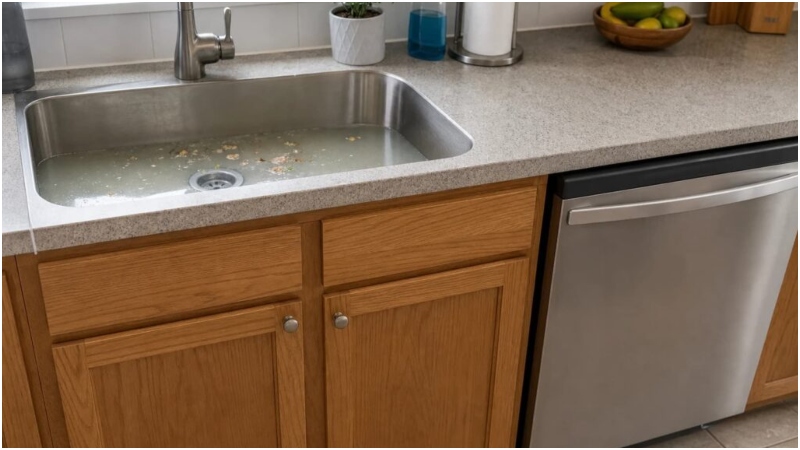
You load the dishwasher after dinner, start the cycle, and walk away. A little later, you notice dirty water rising into the kitchen sink. The sink drained normally when you washed your hands, so why does the problem appear when the dishwasher runs?
When a kitchen sink backs up when the dishwasher runs, a partial blockage in the shared drain line is a common cause. The dishwasher pumps wastewater into the same drainage system used by the sink. If that pipe cannot carry the incoming water fast enough, the water can rise into the sink basin.
The problem can also involve a garbage disposal connection or an improperly installed drain component. Knowing how these parts work together can help homeowners recognize the source without making the situation worse.
How Does the Dishwasher Connect to the Kitchen Sink Drain?
Most built-in dishwashers send wastewater through a flexible drain hose connected beneath the kitchen sink. The hose typically attaches to a garbage disposal inlet or a branch fitting on the sink’s drainpipe.
Both fixtures then depend on the same downstream drainage line.
When everything is working properly, the dishwasher’s pump moves wastewater through the hose and into the drain without affecting the sink.
A restriction farther down the pipe changes that process. Water entering the drain faster than it can leave can rise toward the sink opening.
This explains why a sink that appears to drain normally during everyday use can suddenly back up during a dishwasher cycle.
The timing provides an important clue, although it does not identify the exact location of the blockage.
Why Does a Partial Drain Clog Cause Water to Back Up?
A kitchen drain does not need to be completely blocked to create a problem.
Grease, food particles, and other residue can accumulate inside the pipe, gradually reducing the space available for wastewater.
A slow stream from the kitchen faucet might still pass through the restricted opening. When the dishwasher releases water through its drain pump, however, the pipe might not handle the additional flow.
The result is water rising into the sink.
For homeowners experiencing repeated backups, professional drain cleaning in Spartanburg, SC can help locate and clear restrictions when routine appliance checks do not resolve the problem.
The key is identifying whether the obstruction is in the shared kitchen drain or another part of the dishwasher’s drainage path.
Could the Garbage Disposal Be Part of the Problem?
A garbage disposal connects to the same drainage system as the kitchen sink. In homes where the dishwasher hose attaches to the disposal, both appliances also share that connection.
Food residue and grease can accumulate in the piping beyond the disposal. Even when the disposal motor runs normally, wastewater can back up if the downstream drain is restricted.
A recently installed garbage disposal introduces another possible issue.
New disposals generally have a knockout plug inside the dishwasher inlet. That plug must be removed when connecting a dishwasher.
If it remains in place, dishwasher wastewater cannot pass through the inlet. This typically causes water to remain in the dishwasher rather than rise into the sink.
The distinction matters because a blocked dishwasher inlet and a clogged shared drain require different solutions.
Homeowners should avoid reaching into a disposal or attempting to remove internal components without following the manufacturer’s safety instructions.
What If the Problem Started After Installing a Dishwasher?
If drainage trouble begins immediately after a dishwasher replacement, the installation deserves attention.
The drain hose could be kinked, crushed behind the appliance, or connected incorrectly.
The hose also needs to be routed according to the dishwasher manufacturer’s instructions and local plumbing requirements.
Some installations use a high loop, where the drain hose rises beneath the countertop before connecting to the sink drainage system. Others use an air gap fitting that provides a physical separation in the drainage path.
These arrangements help prevent contaminated sink water from flowing backward into the dishwasher.
They do not serve the same purpose as clearing a clogged kitchen drain.
If the dishwasher was recently installed, a qualified installer should verify the hose routing, disposal connection, and any required backflow protection.
How Can You Tell Which Drain Is Causing the Problem?
The way water moves through the kitchen can help narrow down the issue.
Pay attention to when the backup happens and whether other fixtures are affected.
| What You Notice | What It Could Indicate |
| Water rises in the sink when the dishwasher drains | A restriction downstream of the shared connection |
| The kitchen sink drains slowly during normal use | Buildup in the sink drain or connected piping |
| Water remains inside the dishwasher | A clogged filter, restricted hose, blocked inlet, or pump problem |
| Both basins of a double sink back up | A restriction beyond the point where the sink drains join |
| Several household fixtures back up | A possible blockage in a larger branch or main drain |
These symptoms are clues rather than definite diagnoses.
For example, a dishwasher that fails to drain could have a clogged filter or malfunctioning pump without any blockage in the kitchen sink pipe.
Likewise, a sink backup could involve a restriction beyond the garbage disposal even though the appliance itself works correctly.
What Should You Check Before Calling a Plumber?
If water begins rising into the sink, stop the dishwasher cycle and avoid adding more water to the affected drain.
A few basic observations can help determine what is happening.
Check the dishwasher filter. Remove and clean it according to the manufacturer’s instructions. Food debris can restrict water movement inside the dishwasher.
Look beneath the sink. Check for visible leaks, loose connections, or a drain hose that appears crushed or sharply bent.
Observe the sink’s drainage. If the sink was draining slowly before the dishwasher ran, a restriction in the shared pipe becomes more likely.
Consider recent plumbing work. A newly installed dishwasher, disposal, or sink can point toward a connection or installation problem.
Do not disconnect drain hoses while wastewater is backed up unless you understand how to contain the water safely.
Avoid chemical drain cleaners, especially when water is standing in the sink. These products can create splash hazards and complicate professional drain clearing.
If wastewater is overflowing or approaching electrical outlets or appliances, stop using the affected fixtures and seek professional assistance.
Why Does the Kitchen Sink Keep Backing Up?
A drain that clears temporarily but backs up again can have buildup farther inside the pipe.
Grease is a common contributor to kitchen drainage problems. When poured down a sink, it can cool and adhere to the pipe walls. Food residue and other debris can collect around those deposits.
Over time, the available opening becomes smaller.
Recurring blockages can also indicate a damaged pipe, an improperly sloped drain, or another condition that prevents wastewater from flowing freely.
A plumber can determine which clearing method is appropriate based on the location and condition of the pipe.
Mechanical drain cleaning can remove certain obstructions. For heavier buildup, other methods might be considered after evaluating the piping.
If the same drain continues clogging, a camera inspection can help identify damage or recurring restrictions that cannot be confirmed from the sink alone.
How Can Homeowners Prevent Future Dishwasher Backups?
Good kitchen habits can reduce the amount of debris entering the shared drain.
Scrape food from plates before placing them in the dishwasher. Clean the dishwasher filter as directed by the manufacturer, and avoid pouring grease or cooking oil into the sink.
A garbage disposal should be used according to its instructions rather than as a way to discard large amounts of food waste.
Pay attention when the sink starts draining more slowly or makes unusual gurgling sounds during a dishwasher cycle.
These changes can signal developing drainage problems.
If you replace the dishwasher or disposal, confirm that the drain connections are installed correctly before regular use.
Preventive habits help limit buildup, but they cannot repair damaged piping or eliminate every blockage.
When Should You Contact a Professional?
A dishwasher backup needs professional attention when water repeatedly rises into the sink, drainage remains slow, or basic checks fail to identify the problem.
Contact a plumber if multiple fixtures are affected, wastewater leaks beneath the sink, or the same blockage returns after clearing.
If water remains inside the dishwasher but the kitchen sink drains normally, an appliance repair technician might be needed to evaluate the pump, hose, or other dishwasher components.
When a kitchen sink backs up when the dishwasher runs, the most useful first step is identifying whether the problem involves the appliance or the shared drain.
Addressing the actual cause can restore proper drainage and help prevent another unexpected kitchen cleanup.
Click here for more details.