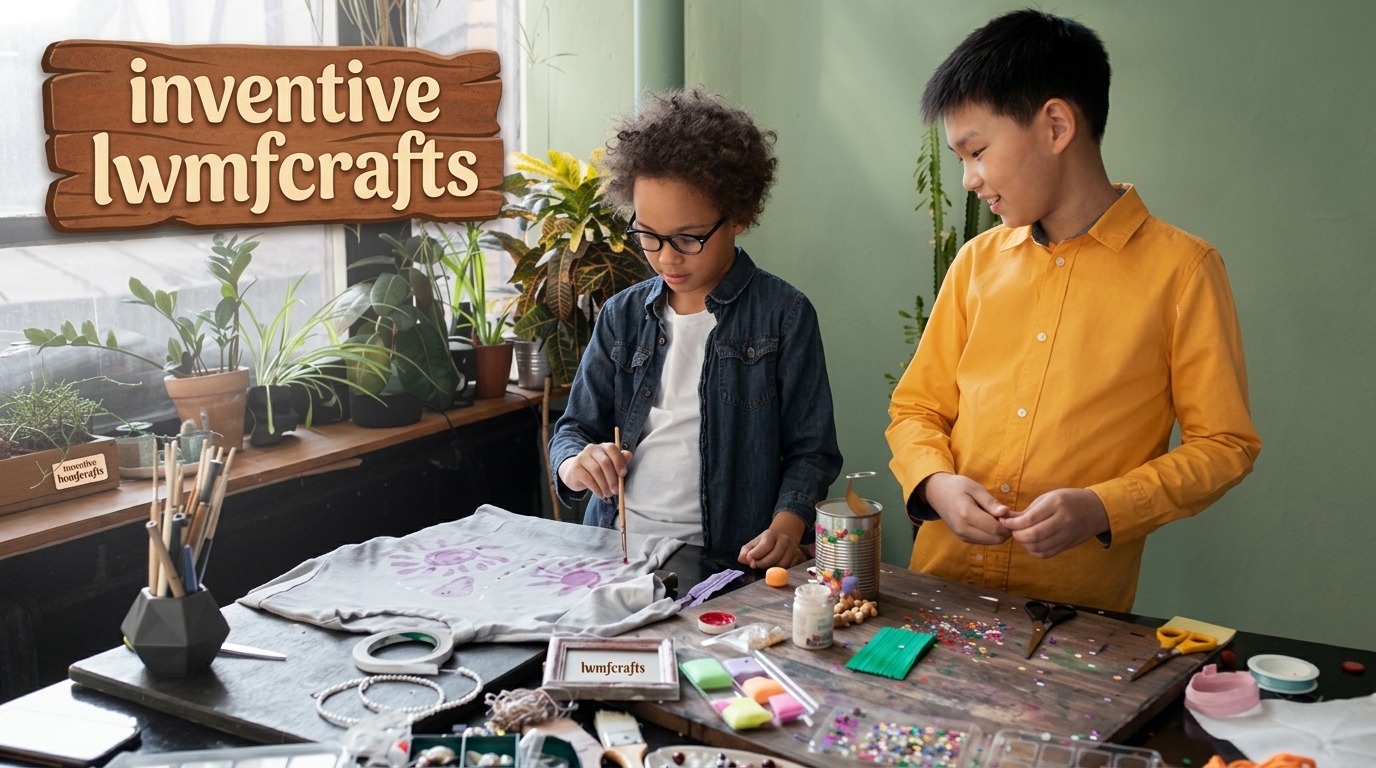
Inventive LWMFCrafts ideas turn everyday household materials into easy, screen-free craft projects that keep kids engaged and learning at home. Most projects take 5–30 minutes, need only common supplies, and can be matched to a child’s age and skill level.
Quick Reference Table
| Age group | Example crafts | Typical time | Mess level | Best for |
| Toddlers (2–3) | Paper tearing art, sensory bins, sticker scenes | 5–10 minutes | Medium | First experiences with texture and color |
| Preschool (4–5) | Rock painting, egg carton flowers, paper snakes | 10–15 minutes | Medium | Practicing scissors and glue with help |
| Early elementary (6–8) | Cardboard castles, folded butterflies, bottle rockets | 15–30 minutes | Low–medium | Independent projects with a clear result |
| Tweens (9–12) | Twig mobiles, salt dough, DIY jewelry | 30 minutes | Low | Longer projects that build patience and skill |
What Are Inventive LWMFCrafts?
LWMFCrafts is the creative activities wing of the parenting and lifestyle site LookWhatMomFound. The idea behind it is simple: you do not need expensive kits or a craft room to make something wonderful with your kids. Inventive crafts start with what you already have — paper, cardboard, nature finds, recycling, and kitchen staples — and turn them into projects children are proud to have made.
This approach is different from complicated craft kits in one important way. A kit tells you exactly what to make and how. An inventive craft gives your child room to decide, experiment, and make it their own. The finished piece does not need to look like the picture. It needs to be theirs.
These crafts are for anyone spending time with kids: parents and grandparents, teachers planning classroom activities, and homeschooling families looking for simple learning projects. The common thread is a desire for easy, hands-on fun that does not require a trip to the store.
Who are these crafts really for?
- Parents who want screen-free time with their children
- Teachers looking for quick classroom activities
- Homeschooling families needing simple, hands-on lessons
- Kids of every age who love making things with their hands
Why Inventive Crafts Matter for Kids (Beyond Fun)
Craft time is not just a way to fill an afternoon. It quietly builds skills that matter long after the glue dries.
- Fine motor skills. Cutting, folding, gluing, and painting strengthen the small hand muscles kids need for writing and buttoning.
- Creativity and problem-solving. When a child decides what to make and how to fix a wobbly tower, they are practicing creative thinking.
- Focus and patience. A 15-minute project teaches a child to see something through to the end.
- Confidence. There is real pride in holding up something you made yourself and saying, “I did that.”
- Screen-free downtime. Crafting gives kids a calm, hands-on alternative to screens, which most parents are glad to offer.
The point is not to turn every child into an artist. It is to give them time to think, make, and feel capable — with you nearby.
Quick Reference: Match the Craft to Your Child
The fastest way to make craft time go well is to pick a project that fits your child’s age, your available time, and your tolerance for mess. Use the table below to match all three at once.
| Time available | 5-minute ideas | 15-minute ideas | 30-minute ideas |
| Toddlers (2–3) | Paper tearing art, sticker scenes | Sensory bin with rice and scoops | Salt dough handprint |
| Preschool (4–5) | Rock painting (one rock) | Egg carton flowers | Paper plate masks |
| Early elementary (6–8) | Paper snake | Folded paper butterflies | Cardboard castle |
| Tweens (9–12) | Twig star | Salt dough ornaments | DIY yarn-wrapped letters |
Mess level guide: no-mess crafts are things like paper folding and sticker scenes. Easy-clean crafts use washable paint or playdough. Full-mess crafts — like sensory bins and salt dough — are best done on a tray or outside.
10 Easy Inventive Crafts to Make at Home
Every project below is grouped by where the materials come from, so you can pick based on what is already in your house. Each idea includes a suggested age, time, and mess level.
Crafts from paper and cardboard
- Paper snakes (ages 4+, 10 minutes, low mess): cut a spiral from a paper plate, add eyes and a tongue, and watch it stretch when you hang it.
- Folded butterflies (ages 6+, 15 minutes, low mess): fold a paper square accordion-style, pinch the middle, and add pipe cleaner antennae.
- Cardboard castles (ages 6+, 30 minutes, medium mess): turn a shipping box into a castle with towers, a drawbridge, and windows.
from nature
- Rock painting (ages 4+, 15 minutes, medium mess): wash smooth stones, paint them, and add a clear seal so they survive the garden.
- Leaf art (ages 3+, 10 minutes, low mess): press leaves and glue them onto paper to make animals, faces, or patterns.
- Twig mobiles (ages 9+, 30 minutes, low mess): tie leaves, feathers, and beads to a twig with string and hang it in a window.
from the recycling bin
- Egg carton flowers (ages 4+, 15 minutes, medium mess): cut apart an egg carton, paint each cup, and attach a pipe cleaner stem.
- Bottle creatures (ages 6+, 20 minutes, medium mess): turn clean plastic bottles into animals with googly eyes, paper fins, and paint.
- Tube rockets (ages 6+, 20 minutes, medium mess): decorate a toilet paper tube, add paper fins and a cone, and launch it with a straw.
Crafts from the kitchen
- Homemade playdough (ages 3+, 15 minutes, medium mess): mix flour, salt, water, and food coloring for a soft dough that keeps for weeks.
- Salt dough ornaments (ages 5+, 30 minutes, medium mess): make a simple dough, cut shapes, bake them, and paint the results.
| Material source | Example crafts | Supplies you need | Best age |
| Paper and cardboard | Paper snakes, butterflies, castles | Paper plates, scissors, glue, markers | 4–8 |
| Nature finds | Rock painting, leaf art, twig mobiles | Stones, leaves, twigs, paint, string | 3–9 |
| Recycling bin | Egg carton flowers, bottle creatures, tube rockets | Egg cartons, bottles, tubes, paint | 4–8 |
| Kitchen staples | Playdough, salt dough | Flour, salt, water, food coloring | 3–9 |
How to Set Up a Craft Session That Runs Itself
A little setup goes a long way. With a simple routine, craft time can run smoothly with very little hovering.
Step 1 — Set the tray. Put everything the project needs on a tray or baking sheet before you call the kids over. A tray catches mess and keeps materials in one place.
Step 2 — Set expectations first. Before starting, agree on the rules: what “done” looks like, where mess is allowed, and who cleans up what. Kids handle limits much better when they hear them up front.
Step 3 — Let the child lead. Offer help when asked, but let them make the decisions. The crooked wing and the extra-glue flower are part of the point.
Step 4 — Clean up together. Make cleanup part of the activity, not a punishment. A quick wipe-down and a “put your project on the shelf” moment ends the session on a proud note.
Step 5 — Store for reuse. Keep leftover supplies in one labeled box so the next craft session takes five minutes to set up instead of twenty.
Common Mistakes Parents Make with Kids’ Crafts
| Mistake | Why it happens | The fix |
| Over-planning and over-buying | Wanting the “perfect” project | Start with materials you already own |
| Expecting a perfect result | Comparing to photos online | Celebrate the child’s version, not the picture |
| Choosing the wrong skill level | Guessing instead of matching | Use the age and time tables before you start |
| Taking over the project | Wanting it to look good | Step back and let the child own the outcome |
| Skipping the setup | Rushing into the activity | Set the tray and rules before you begin |
The most common reason craft time ends in frustration is a mismatch — the project is too hard, too long, or too messy for the moment. The fix is almost always to pick a smaller, simpler project and let the child lead.
Practical Takeaways: The LWMFCrafts Quick Checklist
- Pick a craft by your child’s age, your time, and your mess tolerance.
- Gather materials from what you already have at home.
- Set the tray and agree on the rules before you start.
- Let the child make the decisions and lead the project.
- Clean up together and store supplies for next time.
- Start with one easy idea today — you do not need to plan a whole week.
Frequently Asked Questions
What are the easiest crafts to do with a 2-year-old?
Paper tearing art, sticker scenes, and sensory bins are the easiest for toddlers. They need no scissors, use big simple motions, and can be done in about five minutes with a parent nearby.
What crafts can I make with things I already have at home?
Paper plates, cardboard boxes, egg cartons, toilet paper tubes, rocks, leaves, flour, and salt are all you need for most projects. Check the materials table above and pick a craft from the supplies you already have in the house.
How do I keep my kids busy without screens?
Offer a short, hands-on project with a clear start and end, and set it up on a tray before you begin. Kids settle into crafts best when the materials are ready, and the expectations are clear.
How long should a kids’ craft session last?
Match the session to the child’s age. Toddlers do best with 5–10 minutes, preschoolers with 10–15, and older kids can stay engaged for 30 minutes or more. End on a high note rather than pushing through boredom.
What craft supplies should I keep on hand?
Keep a small box with child-safe scissors, washable glue, markers, paint, paper plates, construction paper, and googly eyes. Add nature finds and recycling as they come in, and you will rarely need to buy anything.
How do I make crafts educational without making them feel like school?
Let the learning happen naturally. Counting petals on an egg carton flower, mixing colors for paint, and measuring flour for playdough all teach quietly. The child is playing; the learning is a bonus.
What should I do if my child loses interest halfway through?
Do not force it. Put the project aside on the tray and come back to it later, or let them stop and keep the materials for another day. A half-finished craft is not a failure — it is a project waiting for the right mood.
Conclusion
Inventive LWMFCrafts turn simple materials into meaningful, screen-free time that builds skills, confidence, and happy memories. The right project depends on your child’s age, your available time, and how much mess you can handle — and the tables above make that choice quick. Start with one easy idea today, let your child lead, and enjoy the making more than the result.
Click here for more details.