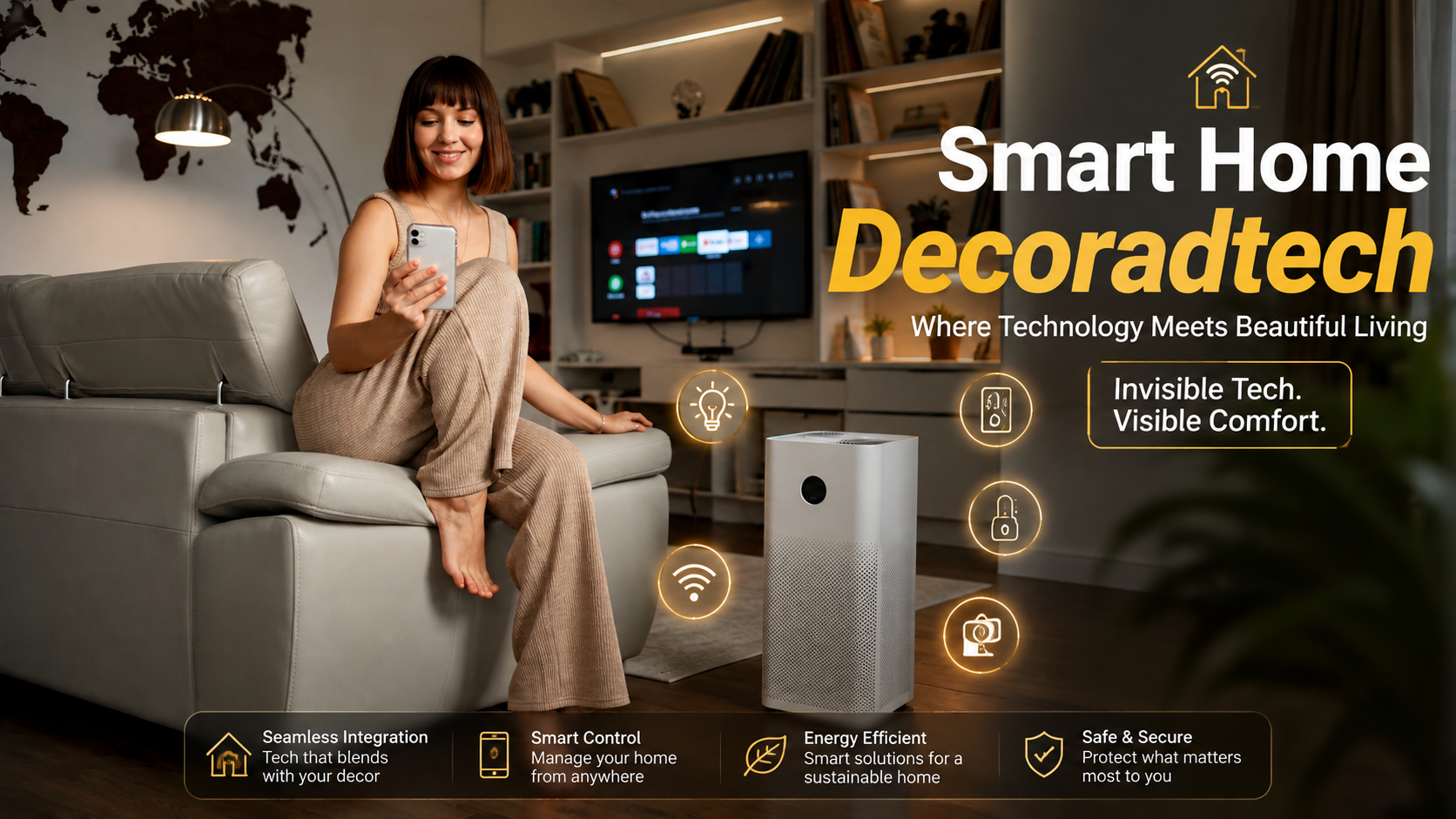
Smart Home Decoradtech blends connected devices with intentional interior design — letting lights, furniture, and routines run on AI while keeping rooms looking like a home, not a showroom. In 2026, the goal isn’t more gadgets. The goal is fewer apps, calmer rooms, and tech you barely notice.
If you only have 30 seconds, here’s the deal: Matter and Thread are now the default plumbing, AI routines replace most app-tapping, and the best decor pieces are the ones with sensors quietly built in.
Quick Summary: What You’ll Learn
| # |
Takeaway |
Why It Matters in 2026 |
| 1 |
Matter + Thread is the new baseline |
Mix-and-match devices across Apple, Google, and Alexa without hubs. |
| 2 | AI home automation predicts, not just reacts |
Lights, thermostats, and shades anticipate your routine. |
| 3 |
Smart furniture hides the tech |
Desks, beds, and side tables hide cables, sensors, and charging. |
| 4 |
Wellness lighting beats RGB gimmicks |
Circadian and task-tuned color temperatures win in 2026 |
| 5 |
Start small: lighting + one thermostat |
Two products cover 70% of magic per dollar |
What Is Smart Home Decoradtech in 2026?
Smart Home Decoradtech is the deliberate marriage of two worlds that used to live apart: smart home decoration and integrated technology. A plain smart bulb over a bare bulb is a gadget. A smart bulb inside a fluted pendant, voice routines mapped to your evening cookbook, and a side table that hides the hub is decoradtech.
In 2026, decoradtech shifts away from flashy LED strips. It leans into discreet design so people forget it’s there.
Three core ideas sit underneath the trend:
- Aesthetic first. Cables hidden. Hubs tucked inside cabinets.
- Automation by behavior. Motion + ambient light + time of day, not endless app taps.
- Energy and wellness intelligence. Devices sense who is home, learn the rhythm, and cut waste.
Smart Home Decoradtech vs. Plain Smart Home Gadgets
A normal smart home gadget solves a single task. Smart Home Decoradtech solves the task and looks considered.
|
Category |
Smart Gadget Only |
Smart Home Decoradtech |
|
Smart lighting ideas |
Single color bulb |
Tunable pendant + circadian routine + hidden driver |
|
Smart furniture ideas |
Standing desk with chips |
Desk with cable channel, under-mounted LEDs, Qi top |
|
Home decor technology |
Voice assistant plug-in |
Voice puck recessed into wall plate matching hardware |
The difference sounds small. It shows up every time you walk into the room.
Smart Home Decor Ideas Worth Stealing This Year
Five decoradtech wins that punch above their weight:
- Fluted pendants with Matter bulbs. Hidden joinery, dim-to-warm routines.
- Panel art that doubles as speakers. Audio fabric blends with canvas.
- Side tables with hidden Qi tops. Charge without clutter.
- Plant shelves with built-in grow LEDs. Automated sunrise spectra.
- Walnut cable channels. Map power lines outside of sight.
Buying decor as a system beats buying a gadget. The room reads cohesive — and automation feels inevitable.
Smart Lighting Ideas That Double as Decor
Lighting is the single highest-impact decor/tech upgrade in 2026. The right bulb paired with the wrong fixture looks gimmicky. The wrong bulb in the right fixture looks intentional.
Top categories to consider:
- Tunable white pendants for dining zones. Sync to dinner time.
- Backlit mirrors in bathrooms. Cosmetic lighting is smart lighting.
- Cabinet toe-kick LEDs in kitchens. Motion triggers.
- Sconce-based circadian lights over desks. Mimic daylight shifts.
- Floor lamps with privacy modes. Travel presets for empty homes.
Philips Hue Iris is a recurring favorite for ambient setups that double as table decor.
Smart Furniture Ideas and Built-In Tech
Furniture in 2026 hides tech because style demands it. Custom wood and metal pieces now ship with:
- Cable raceways cut into the grain.
- Qi or Qi2 charging tops.
- Pop-up outlets on desks and nightstands.
- Sensor-led task lighting.
- Under-mounted occupancy LEDs.
The movement sits inside the IoT-enabled furniture category — versatile, sustainable, and engineered to fold quietly into any modern interior layout.
Pick pieces that are tech-neutral first. You want decor that survives a future hub switch.
Smart Home Devices by Room (2026 Picks)
Living Room (modern home technology focus)
- Smart dimmer panel (Matter) on wall switch.
- Motorized woven shades.
- Floor lamp with circadian presets.
Bedroom (tech-inspired home decor focus)
- Sunrise alarm clock with custom wake curves.
- Smart weighted blanket with app + manual override.
- Wall-mounted reading sconces paired with occupancy sensor.
Kitchen (automated home systems focus)
- Touchless faucet with measured pour.
- Smart range hood that auto-adjusts to cooktop heat.
- Pantry sensor to track staples.
Home Office (smart interior design focus)
- Standing desk with memory presets.
- Cable-managed credenza.
- Video bar light tuned for calls.
Home Automation Ideas for Beginners
If you’ve never set up automated home systems, skip the dreamy cool setups first. Start with three triggers that pay off instantly.
- Lighting comes on at sunset. One routine. One sensor. One switch.
- Thermostat drops 2°F when you leave—a single geo-fence rule.
- Bedroom shades close at bedtime. No app, no voice. Just time + light.
Layer cook scenes, party scenes, work scenes once you have that rhythm. By 2026, smart automation quietly fades into the background, with fewer app swipes and less reliance on voice commands — letting the home anticipate what you really want.
AI Home Automation: What Changed in 2026
The 2026 leap isn’t chat-style AI in your camera. It’s predictive AI working locally.
- Thermostats anticipate your morning. They learn from your weekday rhythm.
- Lights infer occupancy from passive sensors. No wearables, no cameras in living zones.
- Vacuums map new layouts in under an hour. Local compute, not cloud round-trips.
The real change: smart homes now feel calmer in daily use — and far more autonomous.
Privacy-wise, on-device AI keeps raw video and audio at home.
Connected Home Technology: Matter & Thread in 2026
Connected home technology has matured fast. Matter-over-Thread is now the default for battery devices.
A few facts worth knowing:
- Thread is an open, IP-based mesh built for low-power smart home devices.
- Matter 1.4 ships in 2026 with cleaner onboarding across Apple, Google, Alexa.
- Older Thread 1.3 apps stop being accepted after Jan 1, 2026.
Practical takeaway: if you’re starting, pick devices labelled Matter + Thread + Wi-Fi fallback. They survive across hubs for years.
Modern Smart Home Design Without the Sci-Fi Look
Modern smart home design in 2026 leans quiet. The look is warm wood, soft metals, organic curves. Tech hides inside the form.
Three rules to keep decor and tech from looking gimmicky:
- Match hardware finishes. Brass switch plates plus brass pendant hooks.
- Choose flat, recessed control panels. Not glowing screens.
- Use textured fabrics for speakers. Audio panels read as wall art.
The high-tech home decor aesthetic? Think engineered comfort — clean lines, deeper color, hidden complexity.
Future Home Design Trends 2026
Future home design marries wellness and AI. Five shifts to track:
- Wellness-led layouts. Bedrooms, baths, and offices optimized for circadian calm.
- Energy-aware systems. Local solar + battery + smart breakers.
- Privacy-first sensors. Radar and mmWave instead of cameras.
- Multi-generation friendly interfaces. Senior-friendly taps, voice, gesture.
- Mixing metals and warmer palettes paired with tech that disappears
This is a home trend first, not a gadget trend.
Smart Home Trends 2026: Year at a Glance
|
Trend |
What’s New |
Who Cares Most |
|
AI voice control |
Predictive, not reactive |
Busy households |
|
Wellness lighting |
Circadian presets |
Remote workers |
|
Matter 1.4 |
Cross-ecosystem pairing |
Renters, mixed-OS homes |
|
Discreet furniture tech |
Sensor-rich but invisible |
Style-first buyers |
|
Privacy radar sensors |
Camera-free detection |
Families |
Source: aggregated from CES 2026 coverage
Smart Living Solutions: Budget Tier Guide
Smart living solutions don’t all need a custom installer. Match spend to lifestyle.
|
Tier |
Spend Range |
What You Get |
|
Starter |
$300–$700 |
Smart bulbs, smart plug, one sensor, video doorbell |
|
Mid-Tier |
$1,500–$4,000 |
Smart thermostat + shades + kitchen sensor set |
|
Premium |
$8,000+ |
Whole-home automation with AI logic and energy mgmt |
A starter tier with smart home decor technology beats a premium tier stuffed into ugly boxes. Smart home technology exists to fade into the home.
Frequently Asked Questions
Q1. What exactly is Smart Home Decoradtech? A: It’s the practice of designing rooms where connected technology — lighting, sensors, automation — feels like part of the decor, not stuck on top.
Q2. Do I need a hub to start in 2026? A: Most Matter/Wi-Fi devices do not. Matter-over-Thread still benefits from a Thread Border Router, but Apple TVs, Echo, and Nest Hubs cover this.
Q3. Which is more important: smart lighting or smart furniture? A: In 2026, smart lighting ideas drive daily impact. Furniture tech pays off for long-term permanence. Start with lighting.
Q4. Will Matter still matter in five years? A: Yes — it’s the most-supported cross-platform standard ever shipped for smart home devices. Spec updates land yearly.
Q5. Can renters use Smart Home Decoradtech? A: Yes. Stick to bulbs, plugs, peel-and-stick sensors, and freestanding furniture.
Q6. Is AI home automation safe? A: Local-AI systems keep data in your home. Cloud-managed ones read your privacy policy carefully.
Q7. What’s a beautiful first room to upgrade? A: Bedroom — lamps + sunrise routine + smart shades. Highest delight per dollar.
Q8. How do I avoid the “tech showroom” look? A: Hide cables. Match hardware finishes. Choose textured audio panels. Skip wall screens.
Final Thoughts
Smart Home Decoradtech is no longer a Google image board of sticky glowing strips. In 2026, it’s the discipline of designing rooms first and adding tech second — so the only thing you notice is the calm.