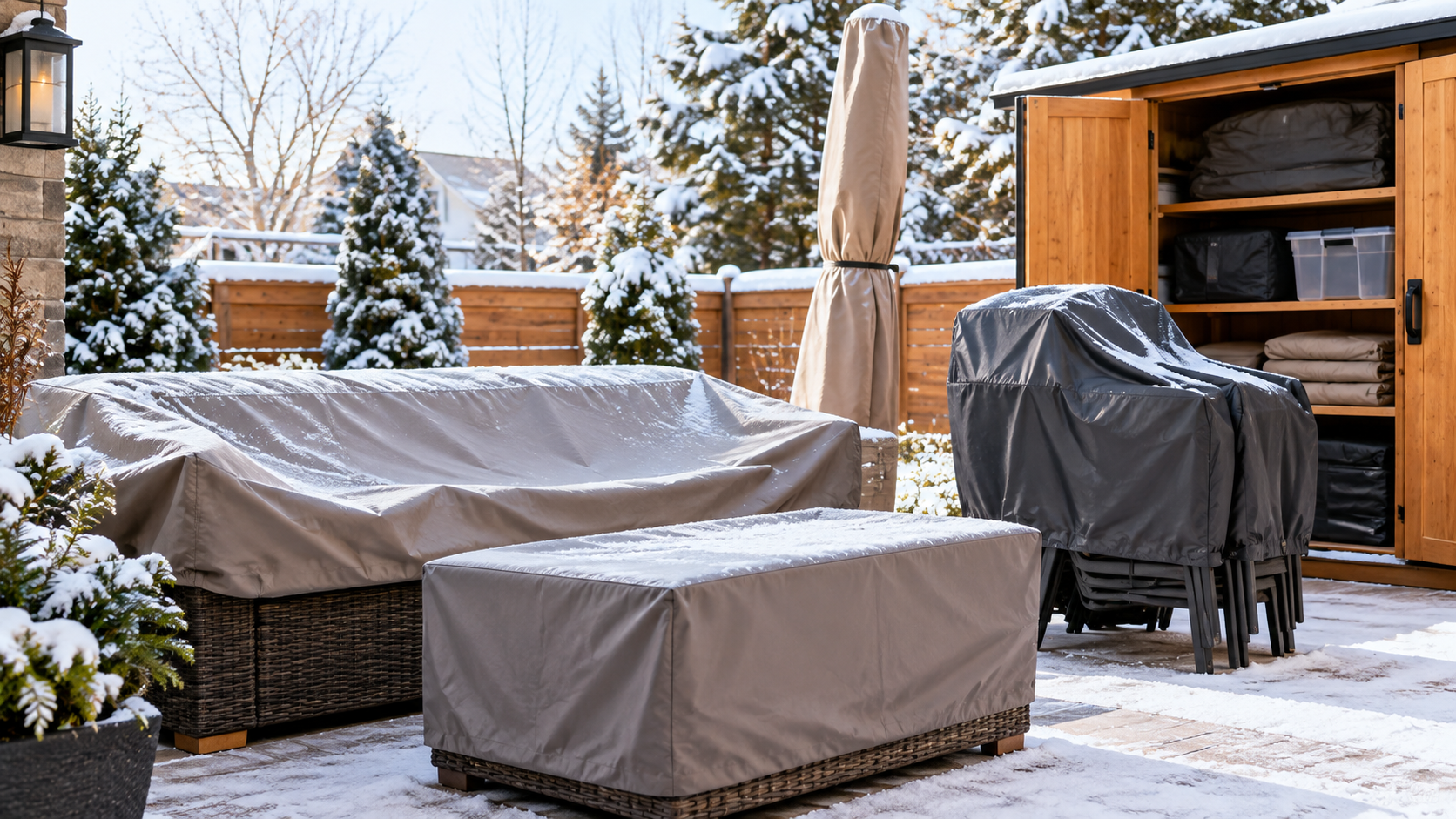
The first hard freeze always seems to arrive a week before anyone is ready. Chairs are still scattered around the fire pit, cushions are damp from the last rain, and the table umbrella has been leaning against the fence since October. Patio furniture is built to handle weather, but there’s a difference between a summer thunderstorm and four months of freeze-thaw cycles, road salt in the air, and snow load pressing down on a tabletop. Winterizing your outdoor furniture properly takes an afternoon and can add five or more years to the life of a set you probably spent real money on.
Clean Everything Before It Goes Away
Dirt left on furniture over winter doesn’t sit still. Pollen, bird droppings, tree sap, and food residue hold moisture against the surface, and moisture is what causes rust, mildew, and staining. Anything you put away dirty will come out of storage worse than it went in.
Wash each piece with warm water and mild dish soap, rinse it thoroughly, and then—this is the step people skip—let it dry completely. Wipe down joints, hinges, and the underside of seats where water pools. If you can, give metal frames a full day in the sun. Trapping even a small amount of moisture in a covered stack is how mildew gets started.
Match Your Prep Work to the Material
Different materials fail in different ways, so the last step before storage isn’t the same for everyone:
- Teak and hardwood. Clean with a wood-specific cleaner and skip the pressure washer, which tears up the grain. Apply teak oil or sealer only if you want to preserve the honey color; untreated teak will silver naturally and stay structurally sound either way.
- Lightweight and rust-resistant, but powder coating chips. Touch up bare spots with matching paint so winter moisture can’t reach the metal underneath.
- Wrought iron and steel. The most vulnerable to rust. Sand down any surface rust, prime, and repaint before storing. Never leave iron sitting directly on a damp concrete floor.
- Resin, plastic, and HDPE. The easiest to maintain, but cold makes plastic brittle. Store it somewhere it won’t get knocked or have heavy objects stacked on top.
- Wicker and rattan. Natural wicker must come indoors — it cracks and unravels in freezing temperatures. All-weather synthetic wicker tolerates the cold, but the aluminum frame underneath still benefits from shelter.
- Glass tabletops. Remove them, wrap them in moving blankets, and store them upright rather than flat. A flat pane under snow load or a dropped tool is a broken pane.
Cushions and Umbrellas Come Inside First
Fabric is the first thing to go bad and the most expensive to replace piecemeal. Wash cushion covers according to the tag, dry them fully, and store them in a breathable container — a vented bin or a fabric storage bag, not a sealed plastic tub that traps humidity. Add a few silica gel packets if your storage space runs damp.
Close, clean, dry, and store umbrellas horizontally or hang them. Leaving one open or upright through a winter storm is how canopies tear and ribs bend.
Where to Put It All
Indoor storage always beats outdoor storage. A garage, basement, or unheated outbuilding keeps furniture dry and out of the wind, which is most of the battle. Elevate pieces on pallets or 2x4s so they don’t touch cold concrete, and leave a little airflow between stacked items.
If your garage is already full — and most are by December — a large shed for backyard storage solves the problem permanently. It keeps everything within a few steps of the patio instead of buried behind the car. Look for a floor kit, ventilation, and enough width to stack chairs without wedging them.
If Some Pieces Have to Stay Outside
Not everything fits inside. For the pieces that stay out, use breathable, waterproof covers sized to the furniture rather than draped loosely. Secure them with straps or built-in ties so wind can’t lift them. Prop something in the center of table covers to create a slope — flat covers collect water, and standing water freezes, sags, and eventually tears through.
Move outdoor pieces close to the house or a wall for wind protection, and knock heavy snow off covers periodically instead of letting it accumulate.
A Faster Spring
Before you close the door, take a quick inventory: label bins by furniture set, keep hardware and umbrella bases in a marked container, and note anything that needs a repair or replacement part. Ordering a cushion in February beats discovering the problem on the first warm Saturday in May.
Done well, winter storage isn’t maintenance you repeat every year out of obligation. It’s the reason a good patio set still looks new after a decade.
Click here for more details.