Hail can cause serious damage in minutes, and much of it isn’t obvious from the driveway. A roof can look fine from the ground and still have bruised shingles that start leaking months later. If a hailstorm has just passed over your neighborhood, here’s what to check and what to do next.
Start on the Ground, Not the Roof
Climbing onto a wet roof after a storm is dangerous. Begin with a walk around the house:
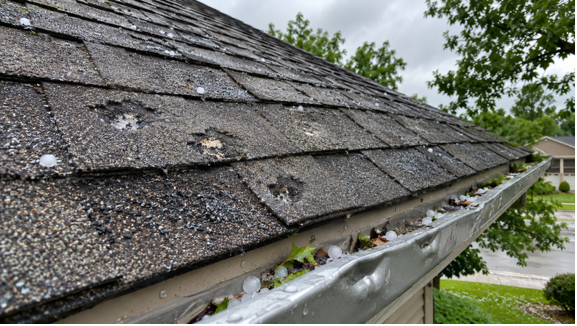
- Gutters and downspouts: dents in metal gutters are one of the easiest signs that hail was large enough to damage shingles.
- Window screens and frames: look for torn screens and chipped paint.
- Siding: check for cracks, chips or dents, especially on the side that faced the storm.
- Air conditioner: dented fins on the outdoor unit are common after hail.
- Decks, fences and outdoor furniture: fresh dings and splatter marks show where hail hit.
- Granules: a buildup of sand-like granules at the bottom of downspouts can mean shingles lost part of their protective layer.
Photograph everything you find, with the date, and include a few wide shots that show which part of the house you’re looking at.
What Roof Damage Looks Like
If you can see the roof safely from a window or with binoculars, look for:
- Dark spots where granules have been knocked off
- Cracked, split or missing shingles
- Dents in metal flashing, vents and chimney caps
- Soft spots that feel like a bruise when pressed (for a roofer to check, not you)
Hail damage often weakens shingles without breaking them. The roof may not leak right away, but its life can be shortened. That’s why many homeowners have a professional inspection even when nothing looks wrong.
Check Inside, Too
Go up to the attic with a flashlight if it’s safe. Look for wet insulation, water stains on the underside of the roof deck, or daylight coming through. Inside the house, watch ceilings for new stains over the next few weeks, especially after the next rain.
Make Temporary Repairs and Keep Receipts
If hail broke a skylight or punched through the roof, cover it with a tarp to keep water out. Your policy expects you to prevent further damage. Save receipts for tarps, plywood or emergency service, since these are often reimbursable.
Get a Professional Inspection
A licensed roofer can spot damage you can’t see and tell you whether repairs or a full replacement make sense. Be cautious with contractors who knock on doors right after a storm, ask you to sign a contract on the spot, or offer to cover your deductible. Get more than one written estimate, check that the company is local and licensed, and read anything before you sign.
Know Your Deadlines
Homeowners policies often set a time limit for reporting storm damage, and some states set their own deadlines as well. Report hail damage to your insurer as soon as you know about it, even if you’re still gathering estimates. Waiting can make it harder to show the damage came from a specific storm.
When the Claim Gets Complicated
Roof claims can turn into disagreements about whether damage came from hail or ordinary wear, whether shingles can be patched or must be replaced, and whether matching materials are covered. In hail-prone areas along the Front Range, homeowners dealing with a large or disputed roof claim sometimes work with a public adjuster, a licensed professional who represents the policyholder. AllCity Adjusting helps Denver homeowners review their policy and damage before they accept a settlement.
After-Storm Checklist
- Walk the property and photograph damage from the ground
- Check gutters, screens, siding and the AC unit
- Look in the attic for leaks
- Cover openings and save receipts
- Get a licensed roofer’s inspection and written estimates
- Report the damage to your insurer promptly
A careful look after each storm, plus good photos, can save you from a surprise leak and a much harder claim later on. Allcity Adjusting, 111 W Jackson Blvd Suite 1700, Chicago, IL 60604, 844.692.3587
Click here for more details.