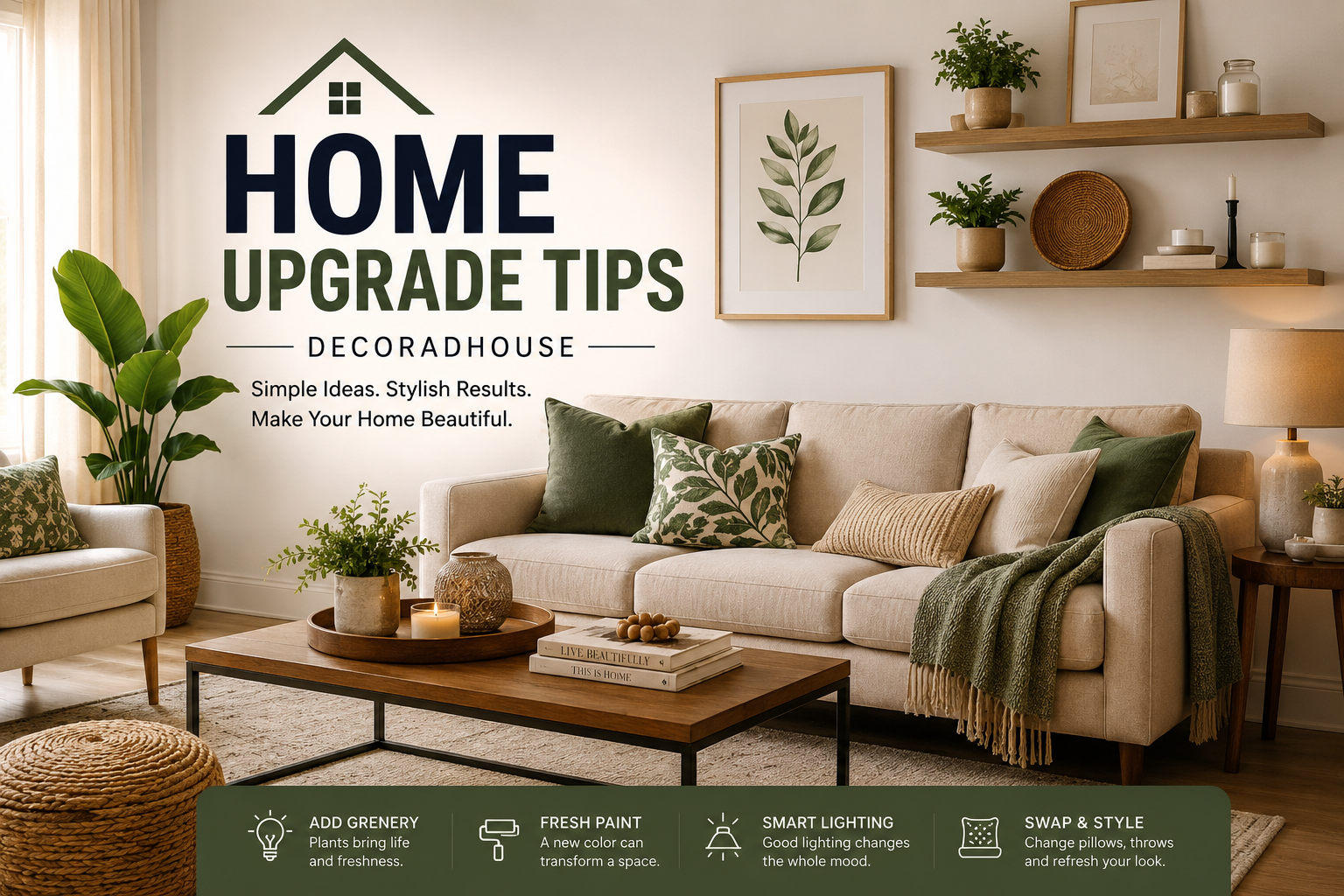
If you searched for home upgrade tips decoradhouse, you probably want ideas that look stylish, feel practical, and actually improve your home. You don’t need empty advice or fancy words. You need simple upgrades that make daily life easier and your space more attractive.
The good news? A smart home upgrade doesn’t always mean a full renovation. Sometimes a better light fixture, cleaner layout, fresh paint, or smarter storage does more than an expensive remodel. Think of it like giving your home a tune-up instead of rebuilding the engine.
| Upgrade Area | Why It Helps | Budget Level | Main Benefit |
| Paint | Freshens the room fast | Low | Cleaner look |
| Lighting | Improves mood and function | Low to Medium | Better comfort |
| Hardware | Updates cabinets and doors | Low | Modern feel |
| Storage | Reduces mess | Low to Medium | Easier daily living |
| Front Door | Improves curb appeal | Medium | Strong resale value |
| Windows | Helps efficiency and style | Medium to High | Better comfort |
| Weather Sealing | Stops drafts | Low | Lower energy waste |
| Kitchen Refresh | Boosts appeal without a full remodel | Medium | Better value |
Plan Your Home Upgrades the Smart Way
Before you buy anything, figure out what bothers you most about your home. Is the entry messy? Is the living room dark? Does the kitchen feel tired? Start where the problem feels real. That’s where home upgrade tips decoradhouse become useful instead of decorative noise.
Start With Function First
A beautiful room still fails if it annoys you every day. So fix the daily pain points first. Add hooks where bags pile up. Improve lighting where you cook. Create storage where clutter keeps winning. Good design should make your life easier, not just prettier.
Pick One Style Direction
Don’t mix too many looks at once. Choose a style that fits your home and stick with it. You might like warm minimalism, modern comfort, soft farmhouse, or clean contemporary decor. Once you choose a lane, every upgrade feels more intentional.
Use Paint for a Fast Reset
Paint still gives you one of the best results for the lowest cost. A fresh wall color can brighten a gloomy room, soften harsh finishes, and make older pieces look more current. Soft white, greige, sage, and muted blue work well because they stay flexible and easy to style.
Upgrade Lighting in Layers
Lighting changes everything. Most homes don’t need brighter bulbs. They need smarter lighting. Use ceiling lights for function, lamps for comfort, and accent lighting for mood. That mix gives a room depth. It also makes furniture, paint, and textures look better.
Replace Small Details That Date the Room
Tiny details do a lot of heavy lifting. Old cabinet pulls, worn faucets, and dated door handles can age a room fast. Swap them out before you spend money on bigger items. Matte black, warm brass, and brushed nickel often give the cleanest update for the money.
Focus on Upgrades That Add Value
Some upgrades don’t just look good. They can also pay you back later. According to the National Association of REALTORS®, a new steel front door can recover an estimated 100% of its cost at resale. Closet renovations, new windows, and kitchen improvements also rank well for return National Association of REALTORS®.
Don’t Ignore Energy Savings
A smart home should feel good and cost less to run. Weather sealing, insulation, and draft control may not look exciting, yet they improve comfort quickly. The U.S. Department of Energy says weatherization upgrades can save households $372 or more per year on average U.S. Department of Energy.
Choose Better Bulbs, Not Just Brighter Ones
Lighting upgrades work best when you pick the right bulb. The Department of Energy recommends focusing on lumens, color temperature, and fixture compatibility instead of watts alone. LED bulbs also last much longer than old incandescent bulbs, which means fewer replacements and lower operating costs, according to the Department of Energy.
Room-by-Room Home Upgrade Tips Decoradhouse Ideas
Once your plan is clear, move room by room. That keeps the process simple. It also helps you spend with purpose instead of panic-buying decor that looks nice online and weird at home.
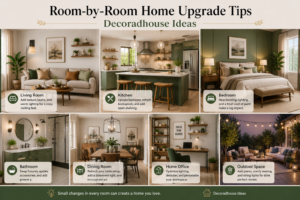
Living Room Upgrades That Feel Expensive
Start with one anchor piece like a rug, sofa, or coffee table. Then build around it. Add a lamp, textured pillows, and one or two pieces of wall art that actually fit the scale of the room. The trick is contrast. Mix wood, fabric, metal, and soft textures so the room feels layered.
Kitchen Changes That Don’t Need a Full Remodel
A kitchen refresh can go a long way without demolition. Paint solid cabinets if they’re still in good shape. Replace hardware. Add under-cabinet lighting. Upgrade the faucet. If the layout works, don’t tear it apart. Clean upgrades often beat chaotic renovations.
Bedroom Upgrades That Feel Calm
Your bedroom should slow your mind down the moment you walk in. Start with better bedding, blackout curtains, and warmer bedside lights. Add symmetry with matching lamps or side tables. A bedroom doesn’t need dozens of decorative items. It needs softness, balance, and a clear purpose.
Bathroom Fixes That Make a Big Difference
Bathrooms respond well to detail work—regrout old tile. Replace a flat mirror with one that has shape. Upgrade the light fixture. Use better towels and cleaner accessories. Raise the curtain rod a little higher to make the room feel taller. These changes sound small, yet they shift the whole mood.
Entryway Upgrades That Set the Tone
Your entry tells guests what to expect in seconds. A narrow console, mirror, hooks, and a small bench can turn a messy drop zone into a clean welcome point. If your budget allows it, upgrading the front door adds beauty and can also support resale value National Association of REALTORS®.
Window Updates That Improve Light and Comfort
Heavy or outdated window treatments can drag a room down. Swap them for simple curtains, Roman shades, or woven blinds. If your windows are old and inefficient, replacement may help both comfort and value. Recent industry findings list vinyl and wood windows among stronger-return remodeling projects National Association of REALTORS®.
Storage That Hides the Chaos
Every home needs better storage. Use baskets where clutter gathers. Add vertical shelves in tight spaces. Fit closet organizers around your real habits, not fantasy habits. Smart storage protects your peace. It keeps a room from feeling busy even when life gets busy.
Outdoor Upgrades That Boost First Impressions
Curb appeal matters more than people admit. Clean the path, wash the exterior, update house numbers, and add planters or warm path lights. These are classic home upgrade tips decoradhouse moves because they improve the feel of the home before anyone even steps inside.
Rearranging Can Be an Upgrade Too
Not every upgrade needs a shopping cart. Move furniture away from walls. Rotate rugs. Hang curtains higher. Remove a few things instead of adding more. Sometimes a room doesn’t need more decor. It needs better spacing and breathing room. That’s often the cheapest win in the house.
Avoid Trend Overload
Trends can be fun, yet they shouldn’t run the whole show. Use them like seasoning. A curved mirror, textured lamp, or bold accent chair can add personality. However, the foundation of your home should stay timeless. That’s how your upgrades age well instead of dating fast.
Build in the Right Order
Always work in layers. First, fix the shell of the room. Then improve the function. After that, style the surface. This order keeps you from wasting money on pretty items that mask bigger problems. It also makes Home Upgrade Tips Decoradhouse far more effective in the long run.
Conclusion
The best home upgrade tips and decor house ideas don’t come from overspending. They come from clear thinking. Start with the spaces that frustrate you most. Improve comfort first. Add better lighting, smarter storage, cleaner finishes, and style that actually suits your home.