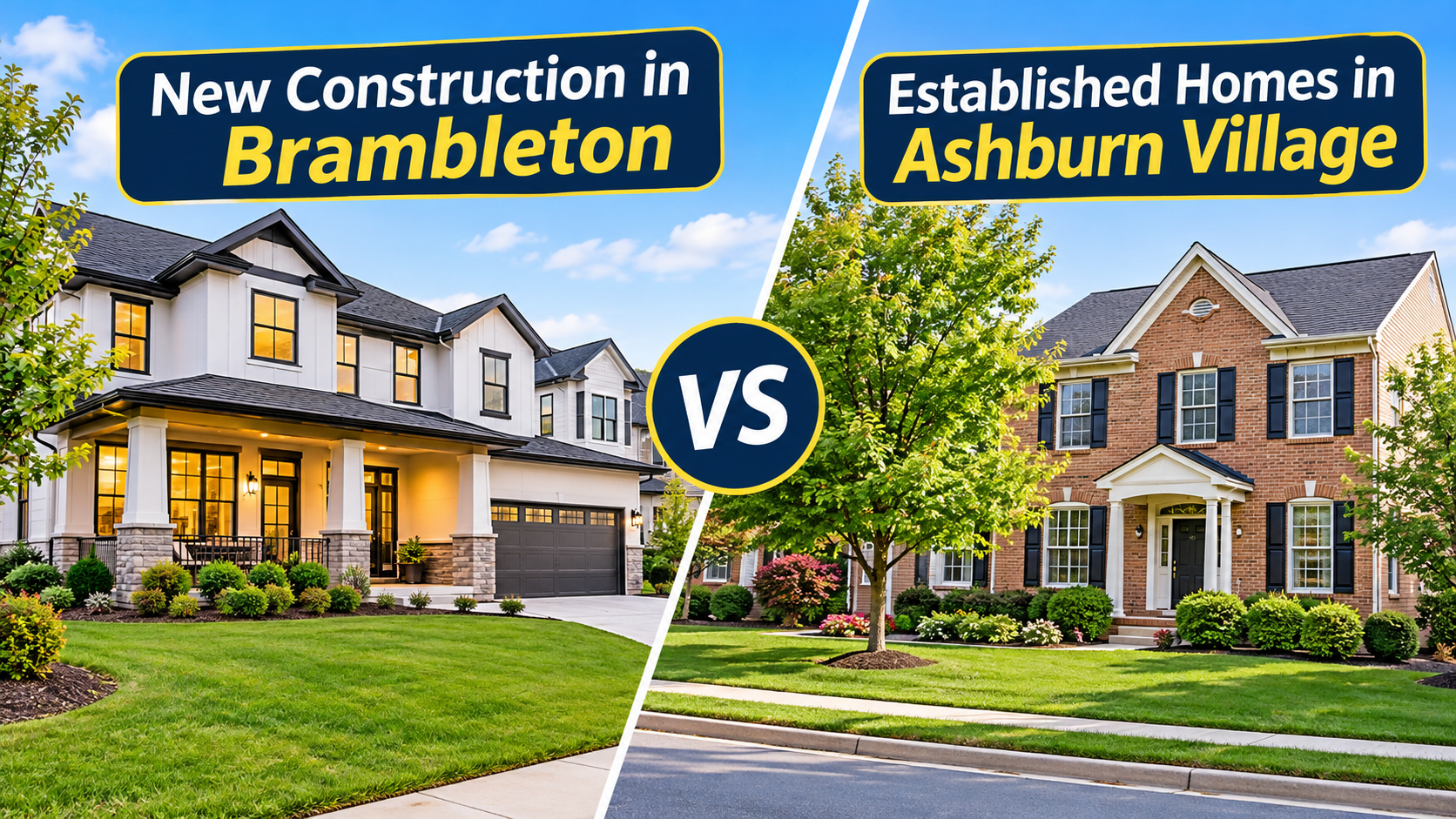
In April 2004, The Washington Times reported that Ashburn Village, opened in 1987, had already reached its final phase of construction. A few miles to the southwest, Brambleton had broken ground only three years earlier and was just beginning to fill in. That head start still shapes both places today, from the height of the trees to the age of the kitchens.
Buyers comparing the two often find themselves weighing very different trade-offs. One side offers brand-new systems and modern layouts, and the other offers established neighborhoods and room to customize. Understanding how the two communities differ in timing, cost, lots, amenities, and fees makes the choice much clearer.
Brambleton and Ashburn Village at a Glance
Both communities are large, master-planned neighborhoods in eastern Loudoun County. They share good access to the Dulles Greenway, Route 7, and the Silver Line’s Ashburn station. Still, they were built in different eras, and that shapes almost everything about them.
Ashburn Village saw its first homes completed in the late 1980s and was largely built out over the following two decades. It includes thousands of townhouses, single-family homes, condos, and apartments, along with lakes, trails, and the well-known Ashburn Village Sports Pavilion.
Brambleton began construction in 2001 and has continued to grow in phases. Builders still offer new townhomes and single-family homes in some sections, and the community centers on Brambleton Town Center with its shops, restaurants, and events.
Here’s a quick summary of what each community tends to offer:
- Brambleton: newer homes, builder warranties, modern open floor plans, a walkable town center
- Ashburn Village: established streets, mature trees, a wide range of price points, a large sports pavilion
- Both: community associations with pools, trails, and organized events
- Both: Loudoun County Public Schools and access to major commuter routes
6 Key Differences Between Brambleton New Construction and Ashburn Village Homes
| Factor | Brambleton new construction | Ashburn Village established homes |
| Home age | Built from 2001 to today | Mostly late 1980s to 2000s |
| Move-in timing | Can shift with build schedules | Fixed closing date |
| Maintenance | Few early repairs, builder warranty | May need updates to systems or finishes |
| Price | Premium for new homes and upgrades | Often more space for the budget |
| Lots and landscaping | Smaller lots, young trees | Mature trees, some larger lots |
| Amenities | Town center, pools, parks, events | Sports pavilion, lakes, pools, trails |
| Future change | Still growing | Largely built out |
1. Move-In Timing and Closing Dates
Buying a resale home in Ashburn Village usually comes with a fixed closing date, often 30 to 60 days after the contract. A new build in Brambleton can take several months, and completion dates may shift with weather, permits, or supply delays. New construction buyers need a flexible plan for where they’ll live if the home finishes late.
That uncertainty affects the move itself. A closing that slips by two weeks can push back the date booked with local Ashburn moving services, or create a gap that calls for short-term storage. Buyers of resale homes face fewer surprises, though they still need to coordinate with the sellers’ move-out date.
2. Home Condition and Maintenance
A new Brambleton home comes with new roofing, HVAC, appliances, and plumbing, plus builder warranties that typically cover workmanship and major systems for a set period. Owners can expect few major repairs in the first years. Small issues often appear as the house settles, and most builders handle these through a warranty walkthrough.
Homes in Ashburn Village were mostly built between the late 1980s and 2000s. Many have been updated, but others may need a new roof, windows, HVAC, or kitchen and bath upgrades. A thorough home inspection is essential in an established neighborhood.
3. Price and What It Buys
New construction often carries a premium for modern layouts, energy-efficient features, and the appeal of being the first owner. Upgrades like finished basements, upgraded flooring, or larger kitchen packages can add significantly to the base price. Lot premiums for corner or wooded lots can raise it further.
In Ashburn Village, buyers can often find more space or a larger lot for a similar budget, especially if they’re open to updating finishes. That makes the community appealing to buyers who want to build equity through renovation over time.
4. Lot Size, Trees, and Landscaping
Newer sections of Brambleton tend to have smaller lots and young landscaping, which is common in recent master-planned communities. Homes sit closer together, and trees take years to provide real shade or privacy. On the plus side, yards are easier to maintain.
Ashburn Village has had more than three decades to grow in. Mature trees, established gardens, and settled streetscapes are among the biggest draws of an older community. Some lots are also more generous, which appeals to families who want room for play sets, gardens, or outdoor entertaining.
5. Amenities and Community Life
Both communities offer plenty to do, with a different focus in each:
- Brambleton centers on its town center, with restaurants, shops, a movie theater, a library, and seasonal events, plus community pools, parks, and trails.
- Ashburn Village is built around the Ashburn Village Sports Pavilion, which offers indoor and outdoor pools, a gym, tennis, and fitness areas, along with lakes, trails, and several community centers with pools.
Families who like walking to dinner or a weekend event may prefer Brambleton. Those focused on sports, swimming, and lake trails often feel at home in Ashburn Village.
6. HOA Fees, Rules, and Future Development
Both communities have homeowners associations that maintain shared amenities and enforce design rules. Fees vary by home type, section, and services included, so always ask for the current amount and what it covers. Some sections in either community add separate neighborhood or condo fees, so confirm the full monthly cost before signing.
Future growth is another difference. Brambleton is still adding homes and commercial space, which means more amenities over time and some ongoing construction. Ashburn Village is largely complete, so its layout and character are unlikely to change much.
How to Decide Which Community Fits Your Family
Choosing between a new build and an established home is easier with a clear process. Work through these steps before making an offer:
- Set your timeline. If you need to move by a firm date, a resale home is usually the safer choice.
- Define your budget with all costs included. Add HOA fees, upgrades, window treatments, and landscaping for new builds, or renovation costs for older homes.
- Rank your must-haves. Decide whether new systems, lot size, mature trees, or walkability matter most.
- Tour both communities on a weekend. Visit Brambleton Town Center and the Ashburn Village Sports Pavilion to see how each feels in person.
- Review HOA documents. Read the rules, budgets, and fee schedules for the specific section you’re considering.
- Plan for inspections. Order a full inspection on resale homes and an independent inspection before closing on a new build.
- Build a backup plan for the move. Line up temporary housing or storage options in case a closing date changes.
Questions to Ask Builders and Sellers
A few targeted questions can reveal costs and risks early. Ask builders what the warranty covers, how delays are handled, and which features are standard versus upgrades. Ask sellers about the age of the roof, HVAC, and water heater, and request records of recent repairs or renovations.
Getting clear answers in writing protects you from surprises after closing. That’s true whether the home is brand new or more than 30 years old.
Timing and Total Cost Usually Decide Between Brambleton and Ashburn Village
For most buyers, the deciding factors are how firm the move-in date needs to be and the full cost of ownership over the first few years. New construction in Brambleton offers modern systems and low early maintenance, with less certainty about timing. Ashburn Village offers a set closing date, mature surroundings, and room to add value through updates.
Both communities provide strong amenities and easy access to Loudoun’s commuter routes. Comparing them on these six points helps families choose the home that fits both their schedule and their long-term plans.
Frequently Asked Questions
Is it better for me to buy new construction or a resale home in Ashburn?
It depends on your priorities. New construction offers modern systems and warranties, while resale homes often provide mature landscaping, a set closing date, and more space for the price.
How long does it take to build a new home in Brambleton?
Timelines vary by builder and home type, but many new homes take several months from contract to completion. Ask the builder for a realistic schedule and how they handle delays.
Do I need a home inspection on a brand-new house?
Yes, an independent inspection is still a smart step. Inspectors can catch installation issues that are easier to fix before closing or within the builder’s warranty period.
What amenities does Ashburn Village have?
Ashburn Village offers the Ashburn Village Sports Pavilion with indoor and outdoor pools, a gym, and tennis, plus lakes, walking trails, playgrounds, and several community pools.
Are HOA fees higher in Brambleton or Ashburn Village?
Fees vary by section and home type in both communities. Request the current fee schedule for the specific neighborhood you’re considering and check what services it includes.
Click here for more details.