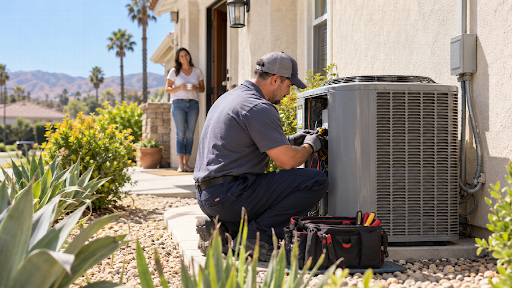
When your air conditioner stops working on a hot day, the first question is usually how quickly someone can fix it. Before searching for “emergency AC repair near me,” take a few minutes to check what the system is doing and whether there is a safety concern. That information will help you explain the problem when you call for service.
You don’t have to identify the equipment’s problem on your own. A few safe observations can help a technician prepare, while knowing when to stop troubleshooting can prevent a bad situation from getting worse.
First, Decide Whether to Turn the System Off
Switch off the air conditioner if you detect a burning odor, smoke, sparks, strange electrical noises, or water around electrical parts. Do not open equipment panels or attempt to repair wiring. If there is an immediate danger, move to a safe place and contact the appropriate emergency service.
A system that is running but producing little or no cool air also deserves attention. Continuing to operate equipment that appears to be malfunctioning may make the problem harder to assess.If you’re uncertain, turn the system off and explain the symptoms to a qualified HVAC technician.
During a heat wave, loss of cooling can be especially difficult for people who are more vulnerable to heat. If the indoor temperature becomes uncomfortable, make a plan for a cooler location while you arrange service.
Make a Few Safe Checks
If there are no signs of an electrical or other safety problem, check the simple things before calling:
- Thermostat: Confirm it is set to cooling and the requested temperature is below the room temperature.
- Power: Check whether the thermostat display and other household electrical equipment are working.If the circuit breaker trips, avoid resetting it over and over again.
- Air filter: If it is easy to access, see whether the filter is heavily clogged. Follow the system’s instructions for replacing it.
- Airflow: Notice whether air is coming from the vents and whether the outdoor unit appears to be operating.
These checks may help you describe the issue, but they will not identify every cause. Leave refrigerant, electrical components, and internal repairs to a qualified technician.
Know Which Symptoms to Report
“AC not working” is a useful starting point. A more detailed description can make your service call more productive.
Tell the company when the problem started and what you noticed first. Is the system completely off, running without cooling, cycling on and off, making a new noise, or leaking water? Did the problem begin after a power outage? Have you changed the filter or adjusted the thermostat?
If you know the equipment’s brand, model, or approximate age, have that information ready. You can also mention whether the home has a central AC system, heat pump, or ductless mini-split. Do not delay calling just because you cannot find a model number.
Ask What “Emergency Service” Means
An urgent need for cooling does not always mean a company has a technician available immediately. When you contact a repair provider, ask directly about current availability and the earliest appointment it can offer for your address.
Confirm whether there are after-hours or diagnostic charges, what the visit includes, and how the technician will explain repair options before proceeding. If a part is needed, ask whether a temporary solution is possible and when the full repair might be completed.
A clear conversation helps you decide based on the service available, rather than assuming a response time from an online listing.
Get a Diagnosis Before Approving a Major Repair
Several problems can produce similar symptoms. Weak airflow, warm air from the vents, and a system that will not start each require an inspection before anyone can say what repair is needed.
Ask the technician to explain what they found, what needs repair, and whether other options should be considered. Request a written estimate that separates the diagnostic visit from proposed work where applicable. For an older system facing a substantial repair, you can also ask how the cost compares with replacement.
Understand the recommendation before authorizing work. A reliable repair conversation leaves room for your questions.
Find Local AC Repair Support
When searching for emergency AC repair, confirm the company serves your area and works on your system type. Read its service information, then call to confirm appointment availability and describe your symptoms.
If you’re in southern California, for example, services like Igloo Air Conditioning & Heating have an AC repair page where homeowners can start that conversation. Explain what the unit is doing, mention any safety concerns, and confirm the current service options for your address.
If the air conditioner has stopped during extreme heat, focus first on keeping everyone in the home comfortable and safe. Then gather the details you can observe, contact a repair professional, and let a proper diagnosis guide the next step.
Frequently Asked Questions About Emergency AC Repair
What should you inspect before contacting an AC repair professional?
Check the thermostat settings, whether power is available, and the condition of an accessible air filter. Check whether the system is operating and if air is flowing through the vents. Do not open panels or work on electrical or refrigerant components.
Should I turn off my AC if it is blowing warm air?
If the system is clearly malfunctioning, switch it off and contact an HVAC professional for guidance. Turn it off immediately if you notice burning smells, smoke, sparking, or another potential safety concern.
Does “emergency AC repair” mean a technician will arrive right away?
Availability varies by company, location, and time of day. Call to confirm the earliest appointment, any after-hours charges, and what the technician can assess during the visit.
What information should I give the repair company?
Provide your address, system type if known, when the issue started, what the equipment is doing, and any unusual sounds, smells, or leaks. Mention any safe checks you have already made.
Click here for more details.